

Reflections on 5 years as Chair
The summer of 2021
It was the summer of 2021 when I had my first conversation with Lee Waters, Deputy Minister for Climate Change, about potentially Chairing the National Infrastructure Commission for Wales.
Born out of an agreement between Plaid Cymru and Labour in 2016 it looked from the outside as though the ‘what’ of NICW had come before the ‘why’. Certainly, the 2018-2021 iteration of NICW suffered considerably from uncertainty around the role and term of the Chair; from the inevitable issues thrown up by the Covid pandemic and subsequent lockdown; and from a lack of dedicated budget apart from that used to pay for Commissioner time.
I thought a lot about the potential of NICW for several months, and following several conversations with senior civil servants, agreed to take on the role. It was not as clear cut a decision as you might think – officials were keen to impress upon me the weight of the role, and the public scrutiny that might result, and I – like many reflective and competent people – carry my share of imposter syndrome.
Still, I had a good pedigree in the energy sector, and had spent years in my own sustainability consultancy focusing on practical ways to implement the Well-being of Future Generations Act (WFGA), so I considered that I had something to offer. The role of Chair was not new to me – I had previously Chaired the co-operative in charge of the Graig Fatha wind turbine, as well as the campaign for Cardiff to become a National Park City.
Changing the old ways
I wanted to change the structure of the Commission, so in consultation with Lee and with his blessing, I restructured it from 12 Commissioners to 8, to include a new role of Deputy Chair, and increased the time allocation of all Commissioners to result in the same budget as for the previous Commission, but with more individual Commissioner time.
I also decided that the time was right for a refreshed Commission – new Remit and Terms of Reference, and potentially a whole new set of Commissioners. With absolutely no disrespect to the previous Commission, the Commissioners had struggled with lack of budget, with Covid and with a lack of direction. This was the opportunity for renewal, and I made clear that all existing Commissioners had my support to reapply for a Commissioner role if they desired.
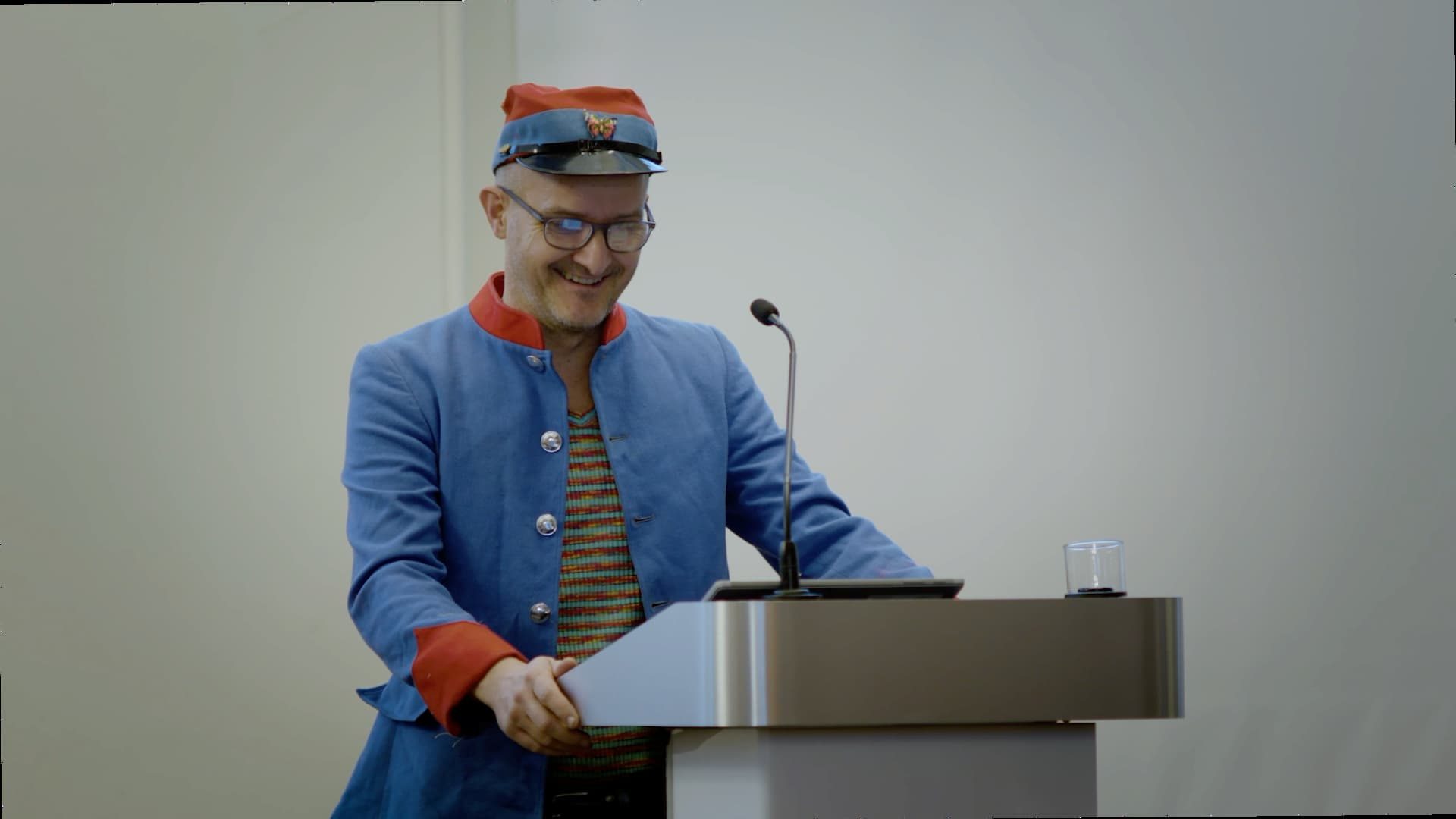
That autumn saw me approved in post following a pre-appointment hearing by the Senedd Committee; with a new head of the NICW programme office appointed shortly after. We advertised widely for new Commissioners, which included my imperfect Welsh home video 👇️
The recruitment process led to an extremely strong shortlist, from which six Commissioners and a Deputy Chair were selected by Lee. We all met for the first time in June 2022.
The team
I want to spend a moment describing what a brilliant group of people I have come to know, respect and value.

Each team member has brought their own extensive insight, experience and style of working – from the two members of the programme office, to the seven other commissioners. I believe that we have created a high-performing team; that certainly doesn’t happen by accident.
I was once asked how I knew that a team was high-performing. For me, communication is a big part of it – plenty of information being shared freely, with professionalism and passion, in the spirit of building the collective. A high-performing team is one where each member ‘has your back’; we trust one another implicitly through a process of building psychological safety. This team must coalesce – yes around supporting one another in our endeavours – but far more importantly, around our common goal of making infrastructure work better for the people of Wales, particularly our citizens who have yet to be born.
It’s important for us to hold the people of Wales as our primary audience (when formally it is the Welsh government), not just because it allows us the space to disagree with one another in pursuit of a common and higher goal, it more or less obliges us, in service to Wales, to seek alternative perspectives. It’s well known in governance that group-think is the enemy; I can assure anybody interested in the inner workings of NICW that we frequently challenge one another on most of the topics we discuss. That is what enables us to speak with confidence when we reach consensus – we have tested our ideas against our collective diverse backgrounds. Our recommendations and opinions reflect this confidence as much as our shared values, which has also been a pivotal part of developing a framework for how we view, understand and assess infrastructure and society.
In order to become a high performing team, we really put a lot of effort into understanding each other, as well as how we work individually and collectively. We built on the expertise of individual Commissioners in aspects of team-building, undertaking training in areas such as the Inner Development Goals. We cemented five policies or ways of working into our operations, and through all our activity developed five values against which we constantly tested our thinking and recommendations.
Our policy framework consisted of:
- The WFGA
- The Socio-Economic Duty (equality of outcome, not just opportunity)
- The Nature Emergency
- The Climate Emergency
- Long-term thinking
The last bullet point is, of course, explicit within the WFGA Ways of Working, but we have it doubly so, because our remit in terms of timescale runs from 5 years into the future, until 80 years into the future.
After plenty of internal work and dialogue, we agreed on our values which are:
- Inclusive
- Transparent
- Radical
- Challenging
- Practical
Every time we came to a decision point we were able to ask ourselves questions against our values in order to help focus. “Is this recommendation radical”….”Are we being inclusive”….”Can this recommendation actually be implemented” etc.
Inhabiting the Future
With a remit of up to 80 years into the future, building our understanding and skills in futures thinking was an important part of our ongoing development.
It turns out that Futures is its own large commercial and academic area of study and practise, with many different models (three horizons, Delphi, horizon-scanning for example), and in honesty, with a full-time complement of 1.2 Commissioners and 1.8 Programme Office, we are simply unable to adopt anything that requires significant time input that is not directly associated with our core work.
So we undertook some training; we commissioned a range of activity to help us, including a set of ten essays about Wales in 2100, and two workshops on transport in the future; and we joined the (very useful) futures network ‘Hwb Dyfodol’ for public bodies in Wales.
We also undertook a self-assessment of how we have adopted the WFGA Ways of Working, which showed that long-term thinking is our strongest aspect out of the five.
Ultimately, given the complexity of the field of Futures, and our very restricted resource, I always fall back on a simple heuristic – namely “what will a baby born in 2106 think about the decisions we are taking today”.

What it lacks in academic rigour it makes up for in simplicity, and it is a quick and easy sense-check that at least forces us to contextualise our everyday activity within the needs of future generations. In fact considering the needs of a child in 2106, we are more or less having to consider their lifelong needs too, which (in a sense) brings our remit out another 80 years or so, to nearly 2200. Not an easy task, but one we are trying our best to internalise.
Projects and recommendations
One of the things I am really proud of is our project management. My sincere thanks and appreciation go to the Programme Office and to the pairs of Commissioners who led various annual projects. Our main annual research and reports were:
- 2022/23 – Renewable energy
- 2023/24 – Flooding
- 2024/25 – Climate adaptation and community engagement
- 2025/26 – State of the infrastructure sectors, and lessons learned from large projects
Our methodology borrowed something from the IWA Re-energising Wales research and recommendations which had its own steering committee made up of co-opted experts from the sector. We were very grateful to obtain highly experienced volunteer committees who provided the project teams with their independent support and challenge.
Each project was led by two Commissioners providing redundancy if one was not available for any period, and it also helped with sharing out duties, media activity etc. Senedd Committees were often interested in hearing directly from these lead Commissioners which took a considerable amount of the pressure of me and Jen when it came to the detail of all the work that had been undertaken!
Overall we have been a bit surprised by the lack of engagement by Welsh Government with our projects and recommendations. It has sometimes felt as though our work has been a nuisance to be managed, rather than a serious piece of work to engage with and help guide policy. Maybe we were too impatient; the Plaid Cymru manifesto contained a number of commitments that align with our own recommendations, and perhaps that’s where our focus should be; long term thinking for medium term change….not really a super-galvanising call to action, but in infrastructure and policy, significant change can take a long time.
Site visits
I can’t emphasise how valuable these have been to NICW’s overall intelligence and credibility. The logistics and meeting arrangements are a consistent drain on the Programme Office time (not that they complain, but it’s an observation!), but they get Commissioners out and about as a team, visiting every corner of Wales, talking to communities, experiencing flood protection measures, understanding port requirements….there is no better way to be educated than being there.
Here’s a list of the places we visited:
| Date | Location | Main topics |
| Oct 2022 | Llanrwst | Flooding, uplands management |
| March 2023 | Machynlleth | Renewable energy |
| June 2023 | Milford Haven | Port infrastructure and renewables |
| Feb 2024 | Newtown | Active travel infrastructure, rural issues |
| June 2024 | Aberystwyth | Train and bus infrastructure; rural transport, climate change |
| Nov 2024 | Bannau Brycheiniog | Nature Based Solutions, land management, Futures |
| March 2025 | Fairbourne | Climate change impacts on coastal communities |
| July 2025 | Holyhead | Port infrastructure, coastal transport, large-scale site remediation |
| Nov 2025 | Pontypridd | Flooding |
| June 2026 | Port Talbot | Tata Steel, ABP ports, economic development, offshore wind |
Each time we entered a different community, we benefited from a wider perspective. There are too many highlights to mention here, but I do want to point to a photo that hopefully gives you an insight into how we operate as a Commission – the image below is of Commissioners swimming off Aberystwyth beach in June 2024, just prior to our first meeting of the day.

Other stuff
We are engaged formally to provide recommendations to Welsh Government for the long-term infrastructure needs of Wales. However we have interpreted our wider remit to tell a story about infrastructure in Wales more generally, and we have attempted to do that with our wide-ranging blog posts (some via NICW, some via personal blog posts of individual Commissioners) on topics such as the Roads Review, on cars and roads more generally, explaining our decision to leave twitter (shame on any public body that still uses that binfire of a social media platform!), and on the costs to Wales of our historically feeble policy on building energy efficiency.
We have even engaged in side projects that have ended up surprising us with their scale, breadth and impact, and none more so than our exploration of Nature governance.
Nature Guardian
Our experiment with Nature governance is a brilliant example of what can happen when you pull on an interesting thread produced from previous work, and let it lead somewhere totally new.
It started with our work on flooding, which produced the recommendation:
“By 2028, set up the mechanisms to incorporate nature as a key stakeholder within flooding policy and implementation.”
Simeon Rose, a pioneer in Nature governance, spoke at the launch of that flooding report, and shortly afterwards I found myself reflecting on how likely Welsh Government was to actually pick this recommendation up. I judged the likelihood as extremely low; and then I considered how NICW might adopt the recommendation ourselves, not least because we’d otherwise be open to the charge of hypocrisy, recommending something we weren’t prepared to do ourselves.
That reflection led to two commissioned essays on Nature governance; and then to us testing the concept using a proxy Nature Guardian (borrowed from another organisation) at one of our meetings; and finally to appointing our own Nature Guardian, Elspeth Jones, as a six-month experiment.
Elspeth published an excellent report on her time with us, and was a key contributor to our January 2026 event, where we shared what we’d learned and encouraged other organisations to consider whether a Nature Guardian might be right for them. We believe we became the first public sector organisation globally to appoint one, and we’ve since become something of a pathfinder in Wales, supporting other organisations on their own journey into Nature governance.
My failings as Chair
It would be too easy to end on a positive note, but in aiming to be proud about our collective achievements, I need to ‘fess up’ about my own mistakes – although of course some of these insights only arrive once you’ve stopped doing the job and had a bit of water pass under the bridge.
The clearest one I can point to is that I wasn’t politically astute enough about how a public action can spread out into areas that have nothing to do with your actual remit. I once started a small petition calling for public bodies in Wales to procure only vegetarian or vegan food – fewer than 50 people signed it – and it was picked up and weaponised against Welsh Government by opposition politicians, ending up in a short piece on the Guido Fawkes website. Two Welsh opposition politicians called on Welsh Government to consider my position, and for a few days it was genuinely uncomfortable, despite a blog post I’d written setting out my reasoning, which I still stand by.
My learning isn’t about the topic, or even about the politics. It’s about the role and profile of a public body. If you chair a public body, your personal passion projects can become a liability for the institution, however unrelated they seem. My advice to Board members of public bodies who have the urge to start something similar is either to pause your ambition until your public position changes, or find somebody without such a public profile to front the passion project. Keep your own name off it. I didn’t, and I got lucky that it went no further than it did.
Final thoughts
When I give talks about my time at NICW I frequently mention the ripples of decision-making; how a single choice spreads out across space and time in ways you can’t predict. Lee Waters’ decision to appoint me was one such ripple. It went on to shape a restructured Commission, a radical and diverse team of Commissioners who trusted each other enough to provide meaningful, testing challenge; five years of site visits into every corner of Wales, a slow drip of recommendations that Welsh Government mostly declined or simply misunderstood and, almost by accident, a small experiment with a Nature Guardian that made NICW a global first.
None of that was inevitable. Most of it came from a small team of 3FTE testing themselves, consistently against their values. Namely whether what they were doing was inclusive, transparent, radical, challenging, and practical enough to matter.
I still come back to the same heuristic I used throughout: what will a baby born in 2106 make of the decisions we took today? I don’t know the answer to that; but I know that the brilliant team I leave behind will still be asking that same crucial question, whether on a beach in Aberystwyth, in a flood-prone street in Pontypridd, or on the hills in the Bannau Brycheiniog.
More than any of our reports or recommendations, I’m proudest of the team that we built collectively, and the attitude we took to keep pushing at the boundary of complacency. We refused to accept that business as usual was good enough, or even acceptable.
Diolch o galon i bawb sydd wedi cerdded y llwybr hwn gyda fi.