

A new future for Port Talbot
Old site, new beginnings
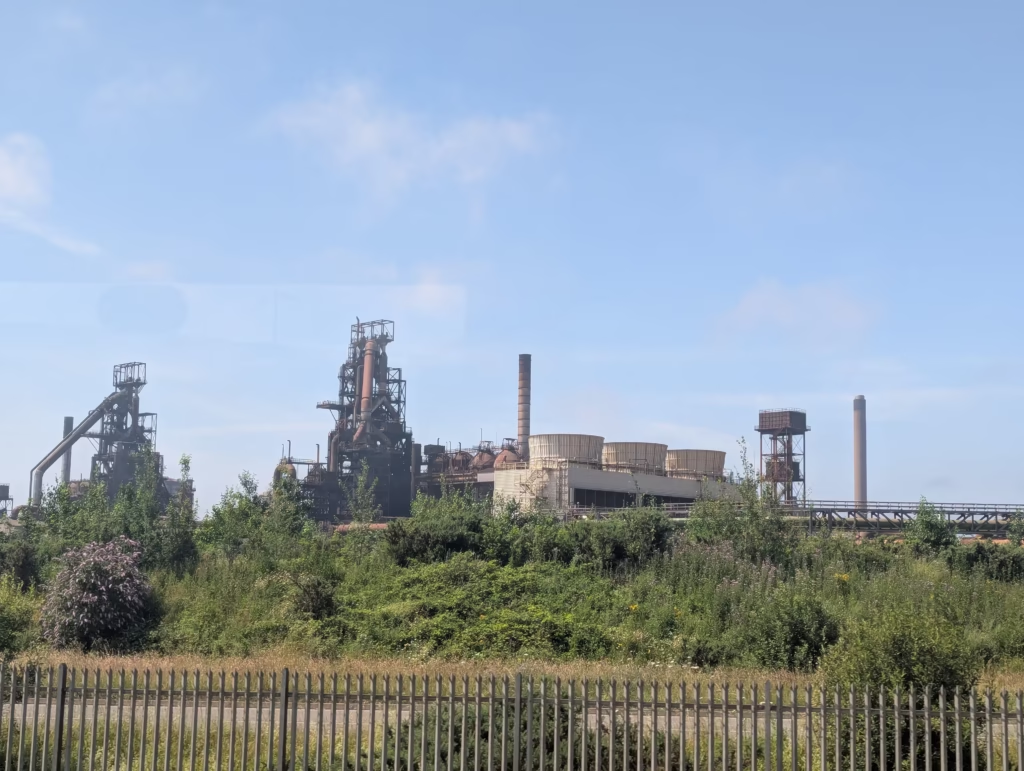
The NICW summer 2026 study visit was to Port Talbot, a reprise of the final site visit of the previous Commission in 2021, but clearly with many updates in the intervening five years.
In February 2024, our Deputy Chair, Dr Jen Baxter, wrote a piece about the consequences of the closure of the blast furnaces at Port Talbot. This site visit takes place in the context of the closure having happened – and the reality of the impact of the change in design of the steelworks on the local community.
The first stop on our visit was to the Tata steelworks. The word ‘stop’ doesn’t do justice to the scale of the place which stretches for kilometres along the coastline of Neath Port Talbot, so in practice it means a significant drive along roads that are surrounded by large industrial buildings and pieces of equipment.
Employment in Port Talbot
There have been many press articles about the closure of the blast furnaces at the site, including about the subsequent colossal drop in Wales’ CO2 emissions.
The greatest fear expressed by the local community ahead of the closure was for job losses, including in the local supply chain. However we were told that there had been only ~120 compulsory redundancies during the whole process, with many people taking voluntary redundancy; and also stories of people deciding to retire gradually, whilst training up young people to maintain skills developed over decades in the sector.
Contrary to the worst fears, there has apparently been no significant change in employment statistics locally. The plant will still employ roughly 2,000 people when the conversion to electric arc furnace is complete, and the change in operation will reduce imports of products by millions of tonnes annually.
There are plans for development of a number of industrial sites near Port Talbot Parkway; when we spoke to an office from Neath Port Talbot council, they were cautiously optimistic about the future.
The available land for development includes around 120 hectares in the Baglan Energy Park; other developments in the area potentially include skills and training institutions to continue to position the communities of Port Talbot and beyond well for the future.
Preparations for the electric arc furnace
The Electric Arc Furnace (EAF) is a huge investment for Tata Steel and for the UK Government. Public funding of £500m was agreed in 2025, to help support the £750m funding coming from Tata Steel itself.
This funding will help safeguard steel production in Port Talbot through recycled a wide range of scrap material, as well as supporting local industrial production and two thousand jobs (plus numerous supply chain jobs).
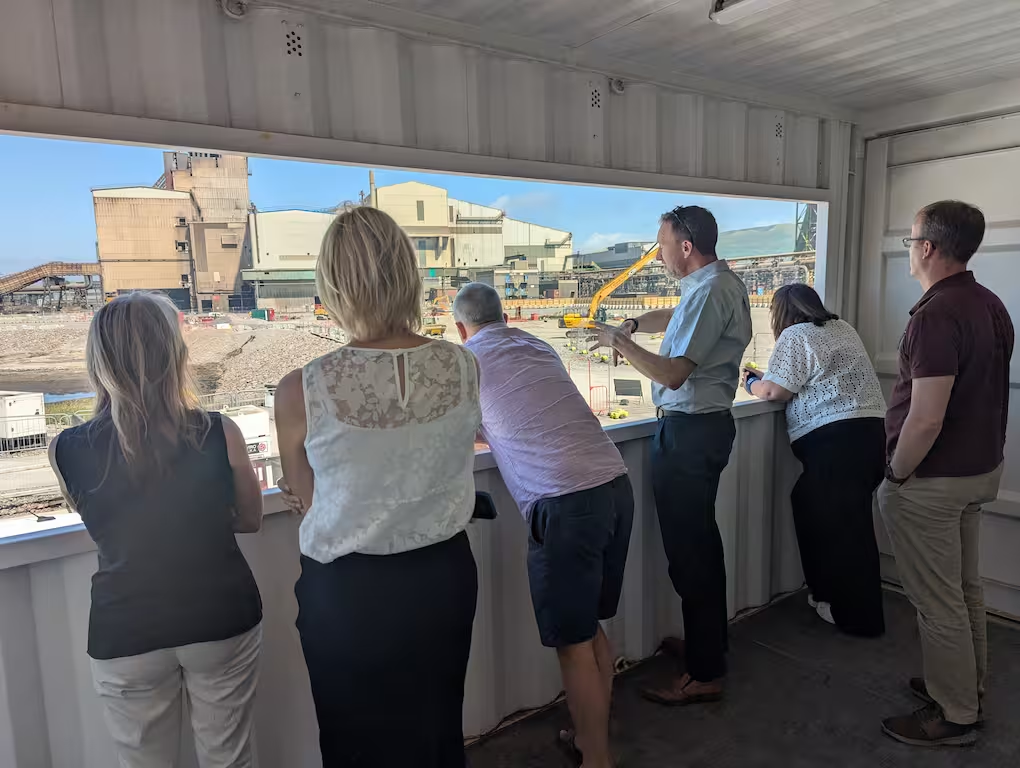
Carbon emissions from steel production will fall by around 90% compared with production using the blast furnaces, providing a huge boost to Wales’ approach to zero-carbon manufacturing.
Commissioners were impressed by the speed of development of the site, hearing about a range of complexities ranging from ‘surprises’ when excavating work has been carried out, to challenges to National Grid’s work on improving the grid connection to allow for the huge capacity necessary to melt steel on a near-continuous basis.
The ‘Port’ part of Port Talbot
Our next stop was to a viewing point where Cathy Hall, a masterplanner with ABP and interim CEO of the Celtic Freeport, described the ambition for Port Talbot to become a hub for the likely growth of floating offshore wind (FLOW) developments in the Celtic Sea.
There are many current challenges, including keeping the port deep enough through dredging to allow the largest vessels to dock, and the removal of some of the colossal cranes that were associated with unloading the raw materials required for production of steel using the blast furnaces.
However the opportunity is potentially immense; Port Talbot could be a highly complementary part of the whole Celtic Freeport concept, supporting the development of FLOW with an attractive port offering for deployment of the very large infrastructure associated with FLOW turbines.
Baglan Bay
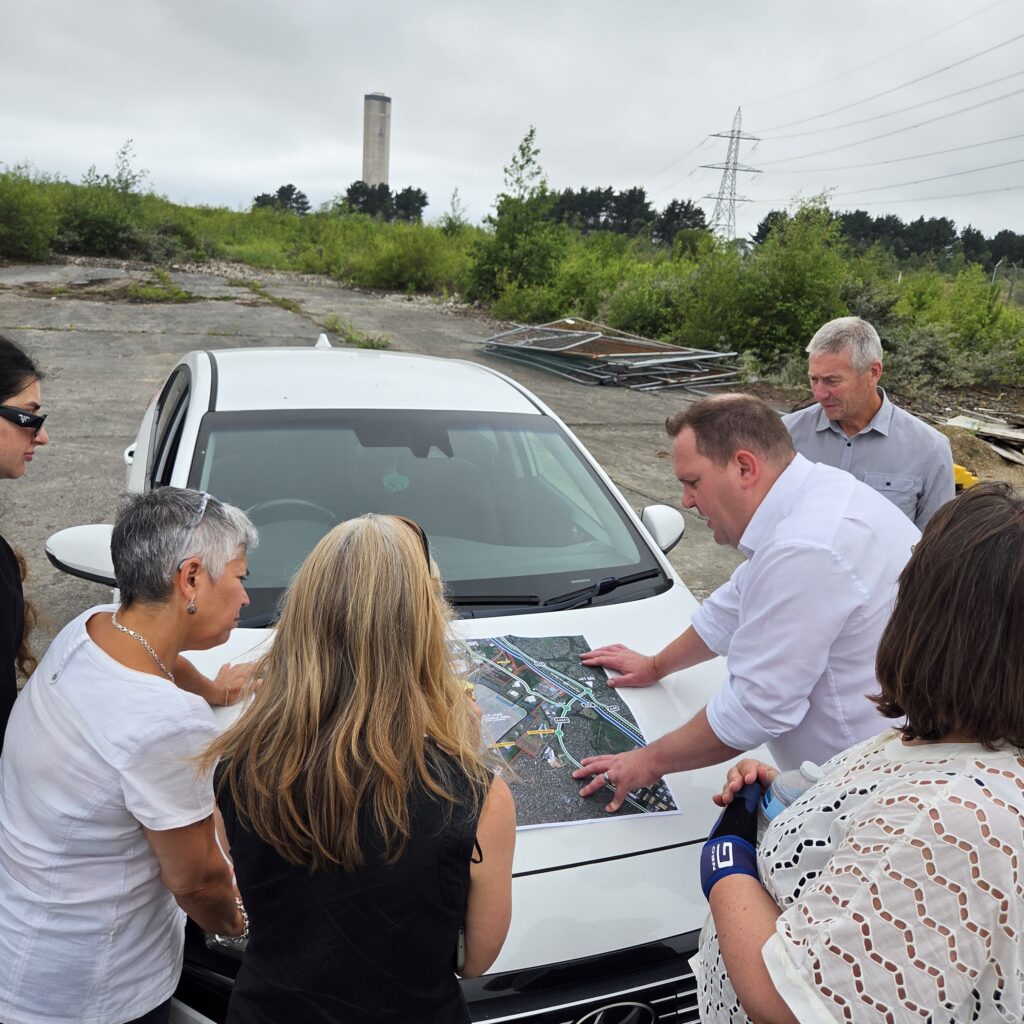
We next made a quick stop at the 950 acre Baglan Bay Strategic Site (formerly the Baglan Energy Park) to hear about the plans for this Welsh Government-owned site. It was disappointing to hear that the previous private-sector owners had not fully realised the potential of the site when it was purchased from BP; but there is hope for the future that, given the site’s ownership in public hands, the significant remediation required can take place for the benefit of local communities creating job opportunities on a site with good strategic connections.
Stakeholder Discussion
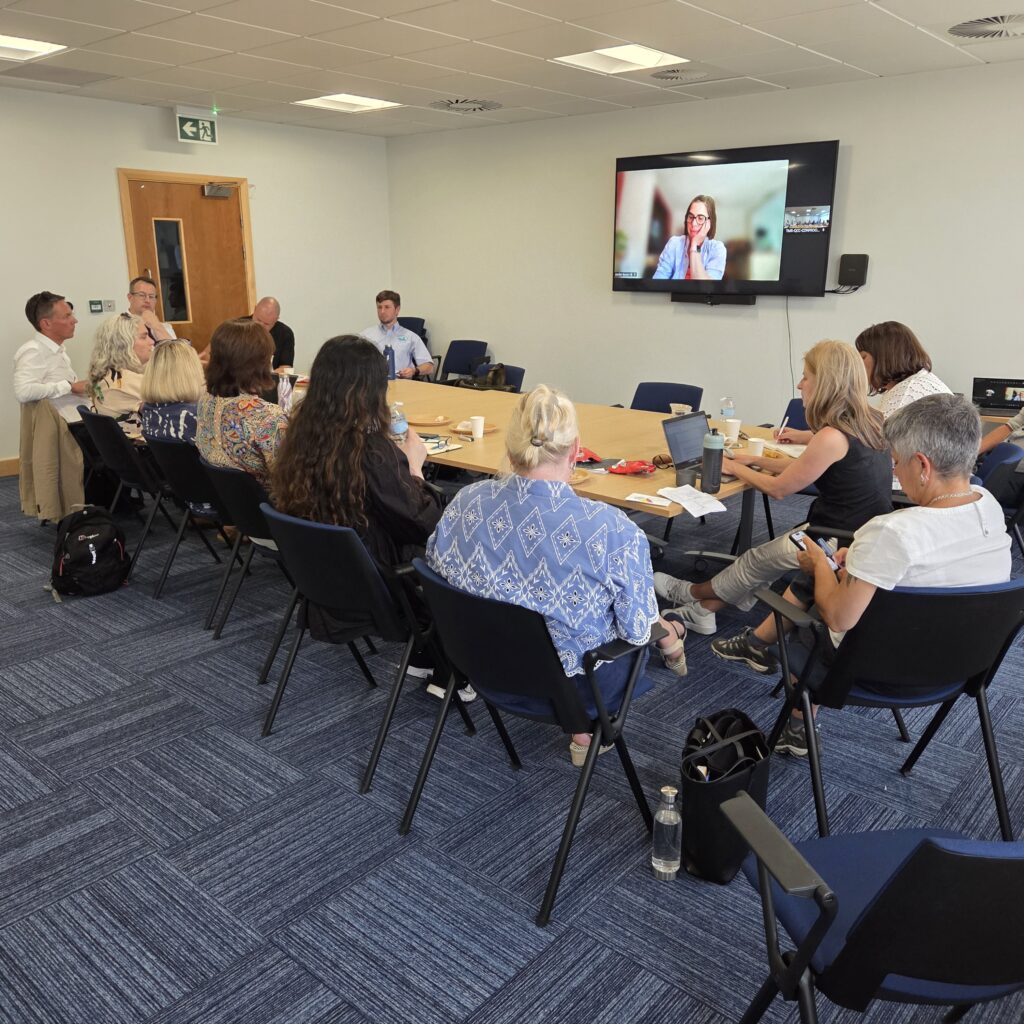
In the afternoon our discussion with Stakeholders highlighted the growing challenges of working with SMEs to deliver the skills needed for a changing economy, alongside the opportunities presented by the proposed Development Agency. There was a strong sense of uncertainty, with the loss of Tata as a source of secure, long-term employment creating significant concern. While initiatives such as the Celtic Freeport were raised as potential solutions, there was recognition that no single intervention will fully replace the stability previously provided by major employers, although there was a discussion if that was a sustainable model in itself. Participants described a complex landscape, with “a lot of noise” around future opportunities, making it difficult for businesses, training providers and individuals to plan with confidence.
A recurring theme was the difficulty of aligning skills provision with future demand. Curriculums inevitably take time to adapt, and anticipating the needs of emerging industries remains inherently challenging. This is particularly evident when considering the need for “wraparound” skills that support specific sectors, as well as the lag between economic change and the development of apprenticeships within supply chains. Stakeholders stressed that the impact of industrial transitions extends far beyond headline job losses, affecting smaller firms and training pipelines over a longer period. In response, there were calls for a clearer, overarching National Skills Strategy and stronger collaboration between SMEs to pool capacity and share approaches.
The discussion also explored the wider role of infrastructure and long-term planning in supporting local economies. Participants questioned how effectively future projects are aligned with workforce development, and whether sufficient forward planning is in place to maximise local benefit. Alongside economic considerations, there was also concern about the cumulative impact on physical and mental health associated with industrial change and the adequacy of support systems for affected individuals and communities. Overall, there was agreement on the need to build greater resilience within the workforce, equipping people not just with sector-specific skills, but with the adaptability required to navigate ongoing uncertainty and structural change.
Many thanks to our hosts at Tata Steel and Neath Port Talbot Council as well as all the stakeholders who contributed to a thoroughly interesting and thoughtful day.
Images courtesy of David Clubb and Stuart Ingram. No AI was used in any part of this blog post.