

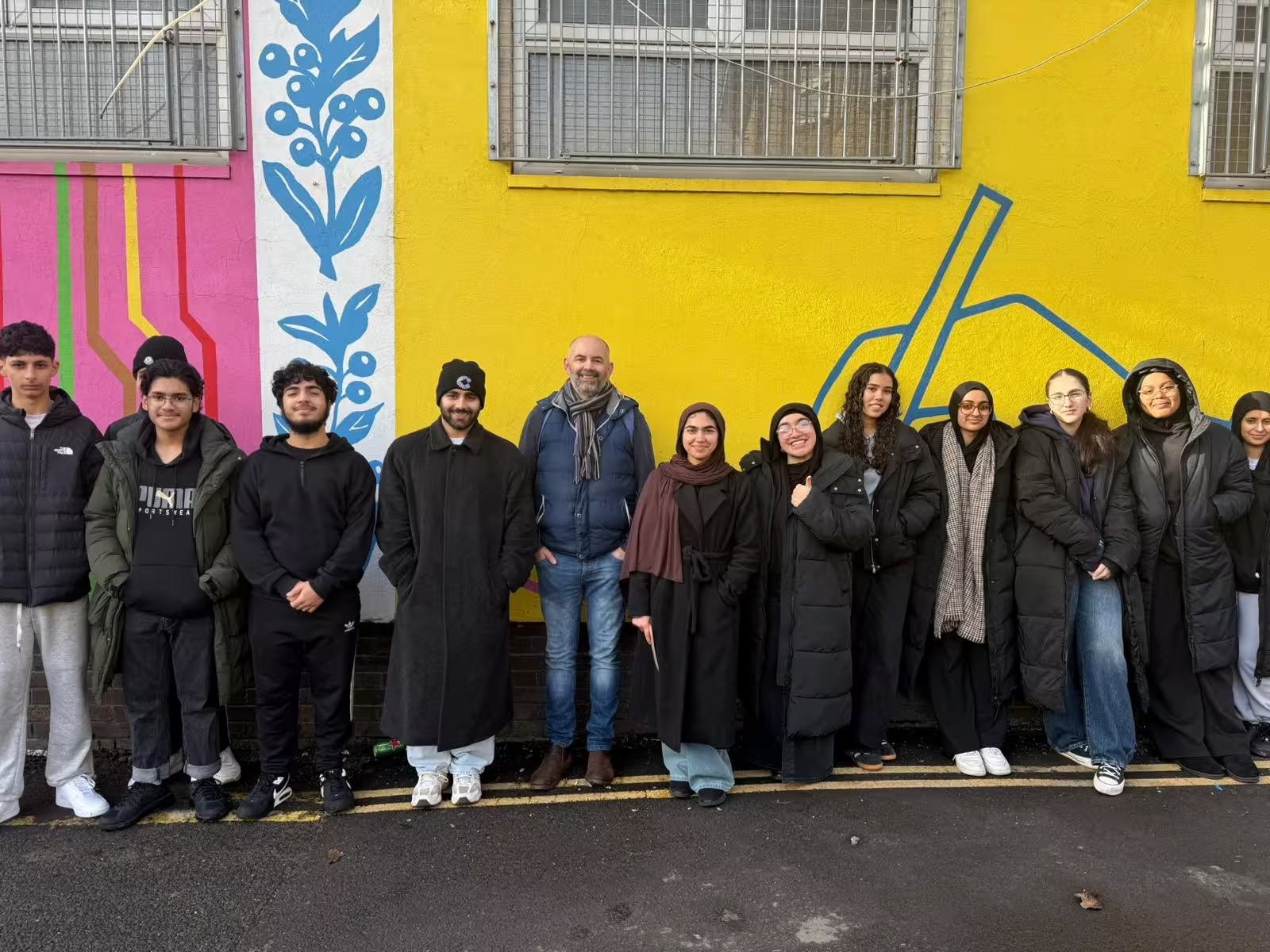
From Engagement to Ownership: How NICW’s Climate Approach Is Taking Root in Grangetown
Over the past twelve months, NICW has continued its work with the communities of Grangetown, discussing climate adaptation as a lived, community-driven process shaped by young people, local mentors, and peer researchers who are translating climate insight into everyday practice.
NICW’s Climate Adaptation Approach: From Toolkit to Practice
NICW’s work with communities in Cardiff was initially centred on Futures methodologies and co-producing creative approaches for engaging diverse communities in climate adaptation conversations. This resulted in the research report last year from the School of International Futures, coupled with our community engagement toolkit to share our learning about how we can have honest, progressive conversations and discussions about our shared future.
Rather than ending with the guidance, we invited the participating community organisations to take forward their own legacy projects, embedding those principles locally and extending the reach of their previous work.
This reflects a broader understanding that effective climate adaptation must be locally led, culturally responsive, and grounded in lived experience. Russell Todd, our facilitator on the ground, helped to co-ordinate this work.
Youth Engagement as Systems Thinking in Action
The Grange Pavilion Youth Forum explored flooding in Pontypridd, connecting climate risks to real-world impacts on infrastructure and communities. This helped developed systems thinking skills, understanding how environmental, social, and infrastructural factors interact.
The group also adapted the ‘Act to Adapt’ game into a version grounded in Grangetown itself, making climate learning locally meaningful.
We are excited to learn that the Youth Forum is looking to expand its reach and use their learning and experience to help assist in the establishment of similar organisations elsewhere in the city.
Young People Embedding Climate Literacy in Everyday Life
SEF Cymru extended NICW’s approach into everyday community settings, working with primary-aged children and families.
Mentors were trained to use engagement methods in study clubs, embedding climate learning within trusted local structures. They expanded the work from the previous year into other age groups, including through games, poetry and role-playing to consider how their future may be impacted by climate change.
The programme culminated in a shared event, reinforcing learning as a collective and ongoing process of engagement as well as congratulating the young people for their efforts.
From Engagement to Evidence: Community-Led Research
Green Soul Cardiff’s peer-led research follows on from their successful work to inform our 2025 report.
Their research study documents lived climate experiences in Grangetown, including flooding, overheating, and infrastructure stress.
It highlights how resilience is already present through informal systems such as community centres, faith spaces, and social networks and reinforces the idea that infrastructure is a living system shaped by social relationships and lived experience.
The report recommends a shift toward community-centred, participatory climate adaptation through four core actions: formally recognising trusted local spaces as community resilience hubs for support during extreme weather; investing in green–blue infrastructure such as sustainable drainage and urban greening to address flooding and heat; reforming emergency communication systems so they are clear, multilingual, and community-embedded; and embedding participatory infrastructure planning, ensuring all residents are directly involved in designing solutions.
Conclusion: A Model of Community-Centred Resilience?
In Grangetown, communities are not simply responding to climate change; they are shaping their own approaches to resilience. NICW’s role has been to create the conditions to support this shift, supporting communities to understand complexity, develop capability, and take ownership.
Whilst NICW was fortunate to engage and carry out its work in an area with strong, established community organisations, we believe that these kind of conversations can take place across Wales in other existing groups, to get the nation talking about adaptation.
In response to our Climate Adaptation report, the Welsh Government agreed that: “Communities have crucial local knowledge about flooding, heat, and other issues, and can play a key role in shaping appropriate place-based solutions….we will build on the recommendations from the Deliberative Engagement Review published in 2025, and will continue to develop tools and resources to enhance our own capacity (and the capacity of others) to apply effective deliberative approaches to inform evidence-based national and local infrastructure solutions. We are keen to work with the Commission as we further strengthen and mature our approach.”
As part of our ongoing work, we will continue to push the Welsh Government on this agenda to ensure these methods are implemented and supported through this new Senedd term.

Helen Armstrong is a Commissioner at the National Infrastructure Commission for Wales and led on our work on Community Engagement and Climate Adaptation.