

Reflecting on our work
The importance of reflective practice
As individuals, we learn best when we critically analyse and consider how we have responded in various situations. Learning happens best when we consider whether the approach we took could have been amended in some way to reach a different outcome.
We consider that a similar approach has value to organisations, which is the reason why we organised our own reflective session in November 2025, looking back over our 3+ years of our activity as a collective.
We are also mindful that roughly half the Commissioners, including the Chair, intend to step down this year. Part of the session aimed at scoping our future work, and how to get the right candidates interseted in the Chair role.
Getting the right environment
The venue is a significant success factor in team events. We chose the Bryngarw Country Park to host our event. It’s convenient to reach with public transport and taxi from Bridgend railway station (which is how we did it), and is a beautiful venue with a range of buildings and rooms, and of course a fantastic setting.
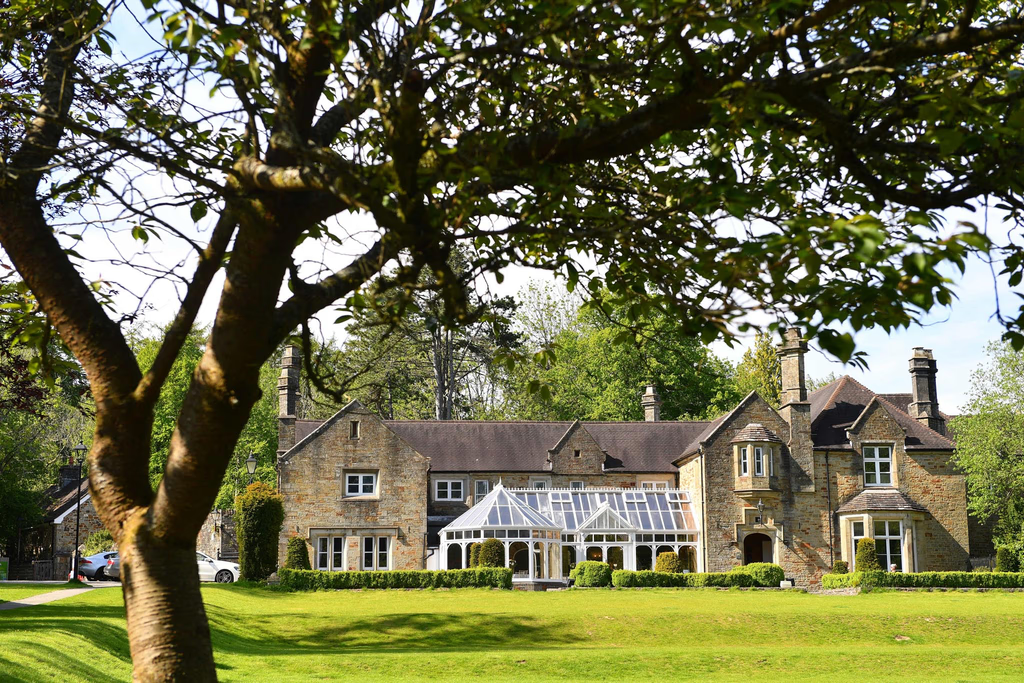
Bryngarw Country Park is managed by Awen, a registered charity, which has a tool (Venues for Good) that supports choosing venues that directly contribute to the charity through hire fees.
The schedule for the day made full use of the venue and countryside, helping remind us of the importance of Nature in our reflections.
We were supported in our work by Landed Futures, a creative team who delivered an outstanding an memorable session.
Warming up
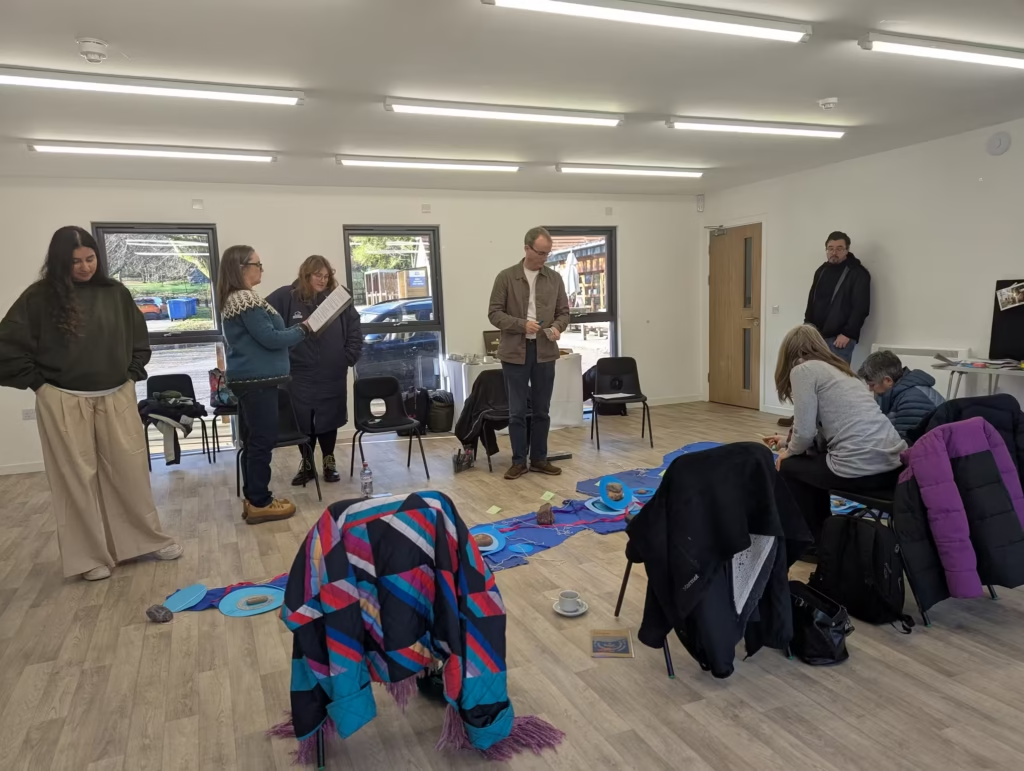
The day began with a ‘before and after’ exercise where we selected images that represented how we had felt on being appointed, and how we now felt after nearly four years of work at NICW. Even though we had no prior knowledge of who had selected which images, we collectively guessed correctly each one, an indication of how well we have got to know each other over the period!
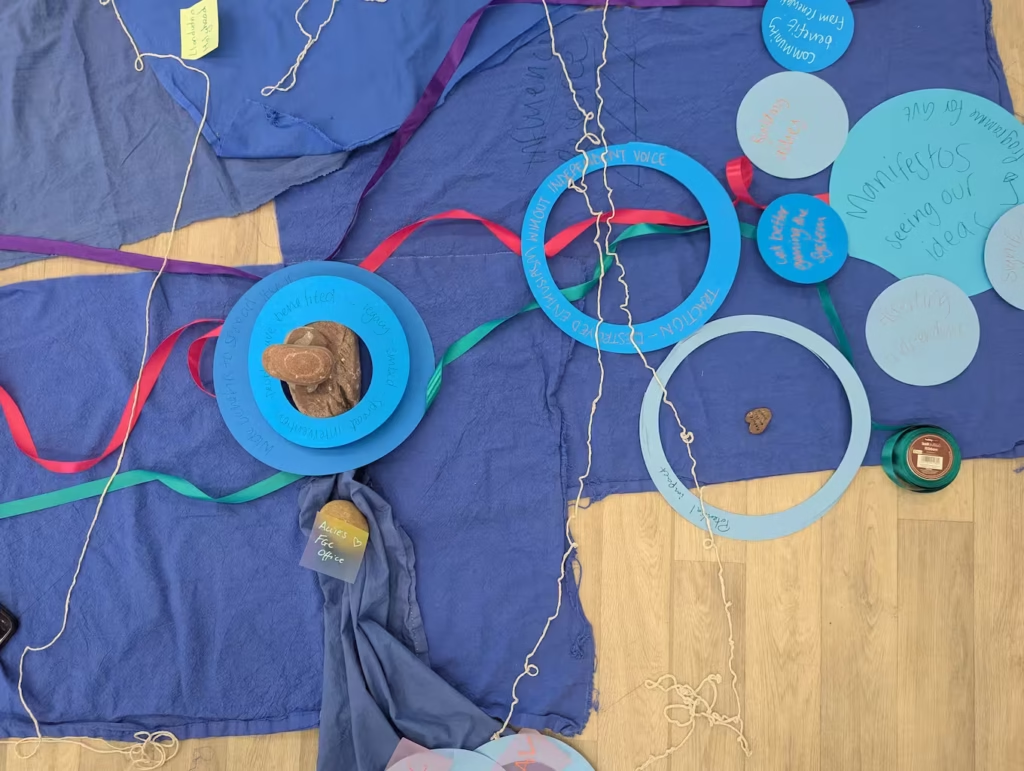
This was followed by a visual interactive workshop that required us to place objects that represented our work, on a timeline denoted by a ‘river’ to demonstrate how we had worked past, over and through barriers.
The ensuing discussion created memorable insights and phrases, including ‘weaponised bureaucracy’, a virtual obstacle that has necessitated strategic planning to navigate.
The exercise resulted in the creation of a visually intriguing art work that challenged us to find ways to describe, and reflect on, the ways we operate within the myriad structures that define Wales’ policy landscape.
Thoughts and flat-packs
A change of venue within the park took us to the next session; a creative writing session to help us articulate our personal views on the journey we’ve undertaken through our association with NICW. This part of the session helped us define the culture that has been key to our success; things such as our values, that continue to define how we operate.
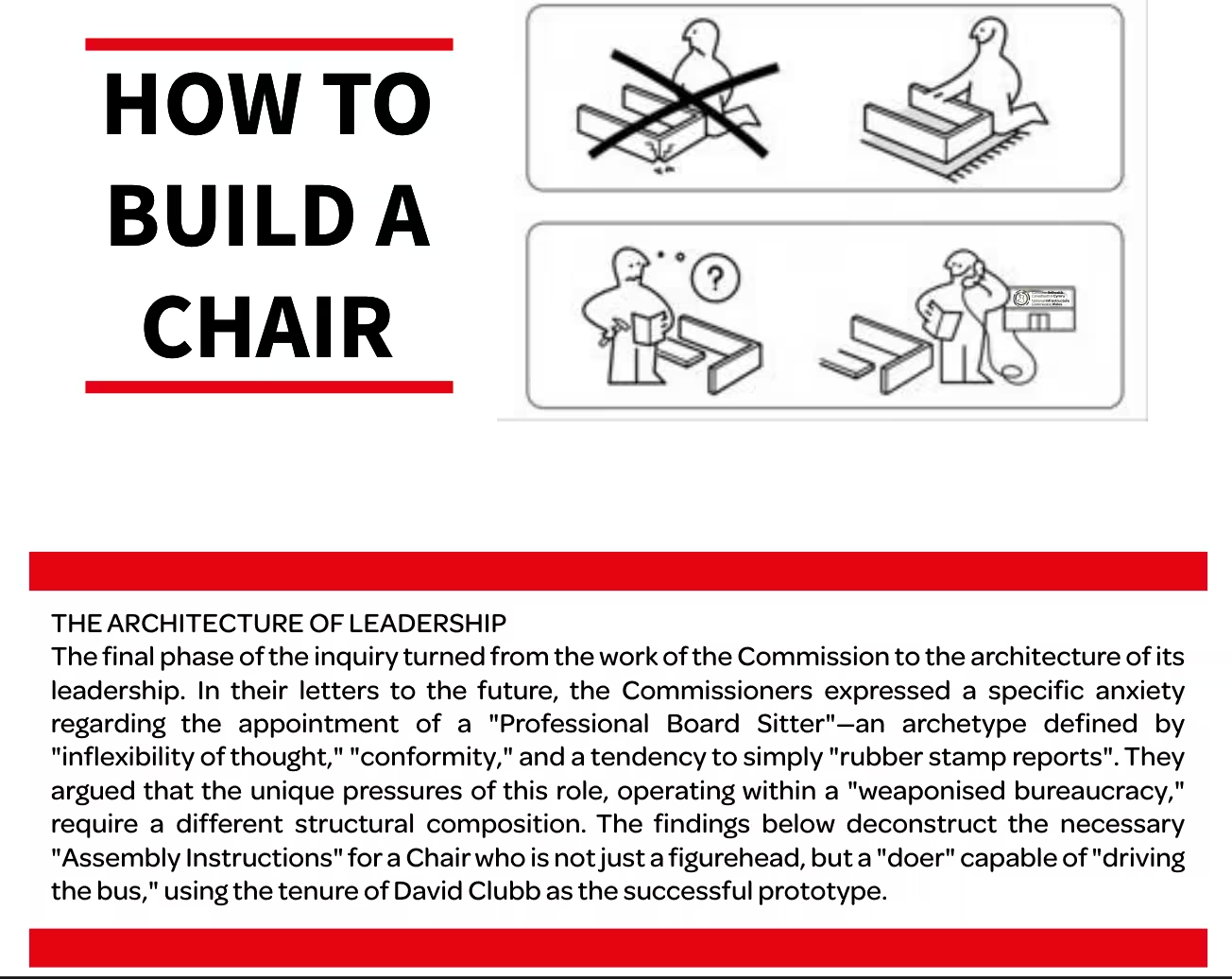
The next session, undertaken when the Chair had left to head to childcare duties, was the ‘Flat-pack leader’ discussion; how to define the characteristics of the next NICW Chair.
What changed as a result of the session?
The key question of value for a session like this is what has changed as a result of our experiences on the day? If it only results in a better story about the past, nothing fundamental has happened.
The report articulates that many of our recommendations to Welsh Government were formally “accepted in principle” but operationally blocked. The real influence often emerged later, for example permitted development rights surfacing years on, or manifesto pledges reflecting our ideas.
So….perhaps we should be changing how we define success as a Commission? Instead of looking at the number of recommendations (immediately) accepted, something more like the number of manifestos referencing similar recommendations; adoption by wider stakeholders of our positions; a narrative shift in the media?
The reflection identified that our soft power is a key strength. So how do we do more to cultivate the ‘meshwork’ of key allies? Do we have the capacity and the resource do deliver thematic roundtables or quarterly convenings of interested parties – or should resourcing this be one of the key asks of an incoming Minister?
We have defined culture as the engine of our success. The psychological safety developed within our meetings and safeguarded by the culture enabled radical framing. Our shared values help create resilience to deal with rejection, and are important in guiding us in the right way to deal with topics we consider. So the internal culture is something that has become our infrastructure, and needs to be maintained in the next iteration of NICW. It should therefore be a Day 1 requirement of the incoming 2026 Commission.
One of our learnings is that it is hard to turn the ‘tanker’ of current policy mid-term. So future Commissions should identify and focus on the points of policy leverage; pre-election periods, manifesto development, consultations etc.
Aligned to this was the concept of ‘weaponised bureaucracy’ which manifested itself in slow or unclear responses, or an unwillingness to fully engage. Our ability to work around blockers has been significantly enhanced by our independent voice, and enabled by our website and social media channels. Maintaining and developing that ‘voice’ should remain a priority for the next Commission.
One of the most positive experiences we had was working with some communities in Grangetown for the ‘Year 3‘ project.

This allowed us to hear directly from community members and to develop mutually respectful and beneficial relationships. It led to the development of a community engagement toolkit for climate change that has been accessed more than 1,000 times since its publication. Can we replicate this in future projects, by embedding one live project or demonstrator every time?
We are left with some answers, some questions and many insights. A truly valuable use of our time, to help shape better infrastructure insights for the future.
Images courtesy of David Clubb, taken on the day. No AI was used in any aspect of this blog article.