


Wales Infrastructure Assessment 2026
Digital and Communications
Introduction
Digital and telecommunications sector overview
This infrastructure review focusses on digital connectivity in Wales.
Digital connectivity is the term used to refer to the fixed and wireless networks used by people and organisations to access and exchange digital information over electronic networks. Examples of these networks are fixed broadband networks, which increasingly use fibre optic cables to connect homes and businesses, and the radio networks of the UK’s three commercial 4G/5G mobile networks. There are however a range of other digital connectivity solutions which are already in use in Wales and the rest of the UK, typically addressing niche applications such as connecting very hard to reach (VHTR) premises in rural areas, beyond the economic reach of fibre networks, or for specific applications such as connecting Internet of Things (IoT) sensors.
Whilst data centres are acknowledged as a key recent growth area and an infrastructure challenge (for example in terms of their demand for energy and water) they are not covered in this review specifically. Instead, this review focusses on the connectivity element of digital infrastructure – i.e. moving data from A to B.
Table 1.1 below summarises some examples of this broader portfolio of digital connectivity solutions which are considered by this sector review.
Table 1.1: Some of the key digital connectivity solutions
| Technology | Key Applications | Pros | Cons |
| Gigabit Broadband (FTTP/H, HFC) | Home/office internet Cloud services Video streaming | Ultra-high speeds (up to 1 Gbps+) Reliable & low latency Supports heavy data use | Capital intensive deployment Limited in rural/remote areas Installation time |
| Fixed Wireless Access (FWA) | Rural broadband Quick broadband rollout Temporary connectivity | Fast deployment Cost-effective for hard-to-reach areas No need for cables | Susceptible to weather/interference Lower speeds & capacity vs. fibre Requires frequent equipment refresh |
| 4G/5G Mobile | Mobile internet IoT devices Smart mobility Rural/urban coverage | High mobility Wide coverage 5G offers high speed & low latency | Variable coverage and performance Congestion in dense areas Coverage gaps |
| Low Earth Orbit (LEO) Satellite | Remote/rural connectivity Maritime/aviation Backup for critical sites | Global coverage Fast deployment Improved latency vs. traditional satellites (esp. LEO like Starlink) | Expensive for users relative to Gigabit broadband Weather disruption Upfront equipment costs |
| Long Range Wide Area Network (LoRaWAN) | IoT sensors Smart metering Environmental monitoring Asset tracking | Low build cost Open ecosystem so good equipment choice Very low power Long range (urban/rural) Low cost for small data payloads | Very low data rates Not for general internet Limited to IoT/sensor data |
UK Government’s key programmes to promote the availability of Gigabit – capable broadband and mobile coverage – have largely approached fixed broadband and mobile coverage as two separate projects. In reality, the digital communications ecosystem is characterised by rapid change and significant interdependence, with combinations of technologies underpinning operator networks and providing options in delivering the services enterprises and consumers need (see Figure 1.1.). For example, mobile networks make extensive use of fibre-based services to backhaul customer traffic from the mast site into their core networks, where calls or data sessions are switched and subscribers managed. Mobile networks are only really radio networks from the device to mobile mast connection, which can be as little as a few hundred metres in urban areas, the rest is fibre based. This interdependency is a common feature of the digital ecosystem; LoRaWAN IoT gateways rely on mobile networks or fixed broadband to take sensor readings back to an enterprise server trained to look for patterns or collect usage data for billing. Even satellite networks drop into fibre as soon as they can.
In addition to architectural interdependency, multiple technologies can also address the same customer need. For example, full-fibre broadband, Hybrid Fibre Coaxial (HFC – used by VMO2’s cable network), Fixed Wireless Access, mobile home broadband and satellite have varying performance and cost characteristics, but all can perform the same basic task of providing home broadband. IoT sensors can be connected by mobile networks, dedicated IoT networks such as LoRaWAN and satellite. Broadband – using WiFi – can also support IoT sensors.
Figure 1.1: High level digital communications ecosystem

Focus of this Report
Focussing on the digital and telecommunications sector in Wales, the purpose of this report is to:
- Assess and explain the current key issues impacting telecommunications in Wales
- Identify future needs, issues, challenges and risks and consider the potential impact or consequences of these risks to Wales (doing so through the lens of the Well-being of Future Generations Act)
- Identify priority issues of most critical significance for Wales
- Guide future Commissioners on the key issues and challenges they might consider as a priority for action and development within the next Senedd term.
- Present existing data to evidence the state of digital and telecommunications infrastructure across Wales now and into the future, to enable future monitoring of performance across this sector.
It is important to note that this report is intended to provide a high-level overview of the issues across the sector and to highlight those which will be important for Welsh Government to consider further. The scope of the study was to provide a narrative and overview of the issues based on sector experience, readily available headline information and with targeted input from key stakeholders. The scope did not allow for primary research or detailed analysis of existing data. Research was completed during 2025, and the document presents the state of play as of then.
In line with NICW’s overarching ambitions and remit, this report takes a long-term view of the digital and telecommunications sector. Broadly, it considers the following timescales:
- Short term – 5 – 15 years ahead, therefore looking beyond the next Senedd term but within the timeline of most existing plans and policies, including Future Wales: The National Plan 2040
- Medium term – 15 – 50 years ahead, to enable forward planning and help shape understanding beyond current policy horizons to consider the next likely significant issues and challenges.
- Long term – 50 – 80 years ahead but in recognition of the difficulties and uncertainties around very long-term thinking, this is subject to a lighter focus. However, the importance of a long term perspective in helping to ensure the actions we take across the sector in the short term are suitably informed, resilient and future proof is recognised.
Stakeholder Input
This paper is based on interviews with stakeholders from Welsh Government, UK Government, broadband network operators, mobile operators and infrastructure providers as well as academia. The insights they provided have helped shape the analysis presented in this document. Further detail is included in Appendix A.
Assumptions
This review has been based on a series of broad assumptions about what a future Wales might look like, to assist with understanding of the longer-term timeframe, and to ensure that the five Infrastructure Insight reports are consistent. The assumptions are based on established, published sources and are intended to provide a high-level guide and to help frame thinking around scale of change across Wales:
- Climate change will have cross cutting impacts in Wales. For example, current worst-case projections anticipate increases in temperature of 3.8 to 6.8°c in the summer by 2070; significant changes in the seasonality of weather extremes, with significant increases in heavy hourly rain anticipated; and sea level rises of between 22cm and 28cm in Cardiff.
- Wales has made progress towards emissions reductions, including an estimated c.60% reduction in emissions from the waste sector over recent decades. However, these changes are considered to have come about due to ‘easy wins’ in the energy and industry sector. Significant further reductions will have been achieved through the closure of the Port Talbot Steelworks in 2024. However, significant change is needed to further accelerate emissions reductions in line with Wales’ Carbon Budgets, with concern identified that these changes are not taking place at a fast enough rate. This demonstrates the impact of policy, behavioural change and infrastructure investment in resource efficiency, while also highlighting the need to replicate similar systemic progress across other sectors.
- Energy use – Welsh electricity demand is projected to at least double and potentially triple by 2050.
- Population is anticipated to increase in Wales over the short – medium term, with a 5.9% increase projected by mid-2032 and a 10.3% increase projected by 2047. This increase will be driven by migration, with natural change being negative over the same time period.
- Age profile – The number of people in Wales aged over 65 is set to increase by 19.6% by 2032 in the short term and will be over 1 million by 2060.
- In terms of economic development, longer-term forecasts identify challenges associated with relatively weak productivity compared to other parts of the UK, compounded by an ageing population. However, Wales retains a strong manufacturing base – proportionally one of the largest in the UK – which presents significant opportunity for Circular Economy innovation in materials, remanufacturing, and industrial symbiosis. Changing working patterns and emerging industries resulting from technological innovation are considered to provide both opportunities and challenges.
- Nature and biodiversity in Wales are under threat. Changes in how we manage land in Wales combined with the effects of climate change will continue to impact nature in the future and will require transformative action to address.
- Emerging development pressures and industries: Wales is expected to experience growth in data-centre infrastructure, renewable energy generation, electrification of transport, and hydrogen production, all of which will increase demand for raw materials, grid capacity, and low-carbon construction. These trends will shape CE priorities around resource efficiency, material recovery, and sustainable supply chains. Their development will need to embed circular design principles from the outset, minimising material intensity and ensuring assets are designed for reuse, refurbishment and recovery at end of life.
Structure of this Report
Following this introduction, this Infrastructure Insight document takes the following structure:
● Chapter 2 sets out background and context
● Chapter 3 investigates the current state of play in the sector, seeking to establish a baseline.
● Chapter 4 considers what the vision for sector could look like
● Chapter 5 looks at future challenges across the sector in the short term
● Chapter 6 considers medium to longer term challenges
● Chapter 7 summarises the key challenges and identifies important next steps
● Chapter 8 considers how progress can be monitored over time.
Background and Context
Why does this sector matter to Wales?
In its recent 10-year Infrastructure strategy, UK Government said that “digital infrastructure supports productivity growth through lowering costs for firms, underpinning technological change, widening access to labour markets across the country and enabling new and innovative services to be provided.”
In its 2020 report ‘Levelling up. How 5G can boost productivity across the UK’ (produced by WPI Economics), Vodafone projected that 5G will contribute £4.2Bn GVA to the economy of Wales over the period 2026 and 2030. Whilst over a slightly different timeframe, a similar economic impact analysis carried out for Openreach estimated that the impact on the Welsh economy of their full fibre broadband rollout (i.e. not including other operator activity) will be £5.2Bn GVA over the period 2024-2030. Combining just these two 5G and Openreach fibre numbers gives a combined economic impact for just these two digital connectivity technologies as projects a combined GVA of circa £10Bn to 2030.
Digital Connectivity is one of the six missions set out in the Digital Strategy for Wales2. Fast and reliable infrastructure is seen as a key enabler of the wider social and economic priorities of Wales and underpins the vision of “Digital in Wales: improving the lives of everyone through collaboration, innovation and better public services.” For example, digital infrastructure has a key role to play in supporting reducing demand for travel.
As is recognised in the Digital Strategy, digital delivery of health and adult social services can improve customer experience and reduce costs and carbon impact compared to traditional in-person models. Economically significant industry sectors such as cybersecurity, advanced manufacturing and key elements of the foundation economy such as tourism and farming can all benefit from the presence of appropriate digital infrastructure. Specific initiatives such as the Anglesey and Celtic freeports will require advances in digital infrastructure to support the automation required for fast and efficient cargo handling.
Digital connectivity is of critical importance to the rural communities of Wales. Approximately 30-33% of the Welsh population lives in rural areas. 90% of Wales’ total land area is used for agriculture. In rural areas, digital connectivity can enable remote working and provide rural businesses with an important route to market. Access to employment, health care and other public services can be delivered digitally without the need to travel into the nearest town or further afield if services are delivered regionally.
Digital advancement can also have wider benefits. Digital twins are digital representations of physical assets, systems, or processes. Their accuracy and ultimately their usefulness, relies on timely, high-quality data. Infrastructure and utility companies in the UK are already using digital twins to optimise operational activities, predict failures and simulate scenarios. Transport for Wales created a digital twin of the Core Valley Lines assets to support construction of new tracks, electrification and signalling upgrades. Water companies, including Welsh Water, are using digital twins for anything from real-time monitoring of water treatment plans to improving leak detection. Data collection is dependent on digital connectivity infrastructure. IoT networks in particular are designed to connect thousands of low lost, long-life sensors that can be deployed along roads, railways and pipelines or can be integrated into critical equipment such as pumps at treatment works. Knowing when a pump is about to fail through changes to vibration patterns, for example, allows replacement work to be planned and avoids the service disruption associated with failure.
Digital connectivity has a role to play in minimising the impact of climate change Bangor University is trialling fibre sensing technology that can use telecoms operators’ fibre optic networks to detect the vibration signatures of events like water leaks in adjacent pipes, embankment movement or rail corridor and road surface conditions, helping to protect infrastructure assets against climate extremes. Other applications include fibre sensing to monitor water mains and sewer performance and smart metering to encourage energy and water use efficiency. Internet of Things (IoT) sensors are a cost-effective way of gathering data that can help local authorities and businesses drive efficiencies and track progress towards net zero ambitions.
Tables 2.1 and 2.2 provide an overview of how the digital and telecoms sector as a whole is critical to the overall wellbeing and success of Wales, with reference to the seven goals (Table 2.1) and five ways of working (Table 2.2) set out in The Well-being of Future Generations (Wales) Act.
Table 2.1 – Contribution to Wellbeing Goals
| Well-being goal | Contribution of this sector |
| A prosperous Wales | Digital solutions can contribute enormously to the economy and prosperity of Wales (c£10Bn to 2030 based on estimates from Vodafone and Openreach) |
| A resilient Wales | Digital connectivity can become the nervous system for smart infrastructure, providing real-time insight into asset condition allowing timely intervention to protect vital services |
| A healthier Wales | Digital delivery of health and adult social services can improve customer experience and reduce costs and carbon impact. Being connected can help combat social isolation |
| A more equal Wales | Digital connectivity can remove some of the constraints faced by rural communities and businesses, levelling the playing field by supporting home working, access to services and markets. |
| A Wales of cohesive communities | Integrating rural and urban communities through the use of distance agnostic digital connectivity. Providing easy access to on line communities and shared insight and a common experience |
| A Wales of vibrant culture and thriving Welsh language | Access to shared cultural and language resources. Supporting Welsh language on-line communities |
| A globally responsible Wales | Digital connectivity has a role to play in minimising the impact of climate change in terms of facilitating data collection, advancing understanding and contributing to informed decision making. However, it is important to be mindful of the carbon footprint of digital infrastructure itself. |
Table 2.2 Contribution of Circular Economy to the Five Ways of Working
| Way of Working | Contribution of this sector |
| Long-term | The sector is investing in future-ready digital infrastructure, like gigabit broadband and 5G, to ensure Wales remains connected and resilient. |
| Prevention | Digital technology, including IoT sensors and fibre sensing, is used to spot issues in infrastructure like leaks and defects, helping avoid bigger disruptions and protecting assets |
| Integration | Digital connectivity supports a wide range of goals, from boosting the economy and improving public services to reducing carbon emissions and supporting community well-being |
| Collaboration | Progress toward improving digital connectivity relies on strong partnerships between stakeholders |
| Involvement | Communities and stakeholders will need to be engaged in digital planning, with local champions and government groups working to make sure everyone’s needs and voices are reflected in new infrastructure |
What shapes the sector today?
Communications technology evolves rapidly. Different technologies compete for the same market (home broadband can be delivered by fibre optic broadband, hybrid co-axial cable TV, Fixed Wireless Access, mobile home broadband and satellite, for example). Operators with different network technologies will compete with one another for the same market opportunity and operators using the same technology will compete against one another on performance, brand and pricing. In some cases this may lead to inefficiencies – for example multiple fibre operators building in an urban area to compete for the same customers. In other areas, it may mean it is difficult to attract providers at all.
Commercial telecommunications companies are best placed to make important technology choices and have access to the significant capital required to build and operate national scale digital networks. Competition incentivises investment in networks. For fibre operators, for example, there is significant market share advantage associated with being the ‘first mover’ to build in an area. For mobile operators, having the latest ‘G’ technology, the best coverage and network performance are all useful customer retention and acquisition tools. Whilst government can play a role in promoting digital connectivity innovation in areas aligned to social and economic priorities, the first task of national and local government is an enabling role; to make it as easy as possible for these operators to build their network infrastructure. That means anything from supportive planning processes, simplifying streetworks permitting, through to access to land and rooftops for mast sites.
Telecommunications policy is a reserved matter for UK Government and shapes much of the digital infrastructure policy and investment programme for Wales
Key programmes such as Project Gigabit and Shared Rural Network (SRN, which has been part funded by the mobile operators) are funded and controlled at a UK government level, with significant input from the devolved nations. Nationwide coverage targets are set by these programmes and apply to Wales. Building Digital UK (BDUK) is aiming to ensure that 99% of UK premises have access to Gigabit broadband by 2032. Project Gigabit – a key part of this strategy – bettered its primary target of 85% UK Gigabit coverage by the end of 2025 by over a year. SRN has already delivered its primary target of 4G coverage from at least one mobile operator in 95% of the UK’s geographic area, but each operator has its own legally binding commitment to cover 89.2%% of the UK landmass by January 2027. These targets will be delivered by a combination of commercial operator investment and state assistance for areas that are not economically viable for commercial operators. Section 3 (Table 3.1) discusses progress in Wales in more detail.
The UK and Welsh Governments have collectively architected a successful rollout of Gigabit capable broadband in Wales. The Welsh Government also has a demonstrable track record of building on UK wide programmes to adapt and extend these national programmes to reflect specific local priorities. Section 3 summarises the key local initiatives – including ABC and Local Broadband Fund (LBF). The forthcoming Extending High Speed Broadband (EHSB) project is designed to connect very hard to reach rural premises with broadband that can support speeds of at least 30Mbps. This low entry speed is a good example of deft local adaptation, with the 30Mbps threshold designed to allow satellite and FWA providers, with technologies well adapted to hard-to-reach rural locations, to engage in the process.
Satellite is evolving from a niche solution towards being a significant enabler for difficult to reach locations, particularly rural areas and rail corridors. Ofcom actions in releasing a frequency band to increase Starlink backhaul capacity to its three UK earth stations reinforces this growing maturity. EHSB is designed to encourage satellite broadband to be part of the solution. The Welsh Government are trialling satellite connectivity to buses, which could translate into rail rolling stock connectivity, matching UK Governments £41M investment in mainline train satellite connectivity. The Welsh Government has supported a satellite connected 5G small cell mini-mobile base station to provide mobile coverage in remote areas. When 6G arrives in the early 2030’s, it will bring satellite integration to mobile networks, allowing satellite connectivity to fill in coverage gaps and bring additional capacity to other areas. Chipset suppliers for high end devices such as the Samsung Galaxy range are already working to integrate satellite connectivity. Mobile operator VMO2 is not waiting for 6G and has announced a deal with Starlink, with a data and messaging service planned for launch in 2026. Welsh Government should build on the satellite momentum EHSB and its innovation work is creating and fully embrace satellite and its role in a country with such a significant rural constituency.
In recent years, many commercial operators have scaled back their build plans in favour of monetising what has already been built. Given that operator build plans are the starting point for defining Project Gigabit intervention areas, gaps can begin to open where operators are no longer building yet are not in scope of Project Gigabit. Even with Project Gigabit funding, build in intervention areas can remain challenging. Operator Voneus (active in Powys and Monmouthshire) recently dropped out of the £12M Project Gigabit contract for Mid-West Shropshire, the contract being picked up by Openreach. Whilst the two Gigabit contracts that cover Wales have been awarded to Openreach, so have a high degree of certainty, the Welsh Government will need to maintain their scrutiny of the Open Market Reviews that BDUK carries out every four months.
The four City and Regional Deals have also funded focussed interventions to address specific regional digital challenges and to support economic growth. Whilst predominantly an ‘own use’ contract, the imminent renewal of the Public Sector Broadband Aggregation (PSBA3) provides similar opportunities now that there is greater clarity around the impact of Project Gigabit and what remains to be done.
In contrast to Gigabit broadband connectivity, mobile network coverage and capacity does not receive the level of UK or Welsh Government attention that it should warrant. Central and local government have mobilised to deliver broadband coverage targets and have been supportive of operator build activities. However, mobile operator relationships are more arm’s length; perhaps not the “culture of mistrust” noted in UK Governments’ 2018 Future Telecoms Infrastructure Review (FTIR) but certainly not the collaborative model supporting Gigabit rollout.
The responsibility sits with both parties. The contrast with Gigabit broadband is partly down to familiarity; the first telephone networks appeared in 1879 and over time the visible infrastructure of telegraph poles and street cabinets has, to some extent, faded into the background of everyday life. Use of Openreach ducts has reduced the need for broadband operators to dig up the streets, keeping disruption to a minimum. Once the build work is completed, the new Gigabit-capable infrastructure is largely hidden below street level or hung from existing telegraph poles ‘out of sight, out of mind’.
Effectively there is a direct relationship between the infrastructure of broadband and the ability to consume a broadband service. Put simply, if you don’t have a cabinet on your street, you can’t have broadband. That same direct relationship between a functional mobile phone connection and the physical infrastructure of masts and cabinets is less obvious in a wireless service, particularly when radio masts are much more visually intrusive.
Mobile networks face a combination of coverage and capacity challenges:
● Coverage is where there is no network signal. Section 3 (Table 3.1) provides further details on coverage in Wales.
● Capacity is where users can connect to a network, but users experience a slow service where there is insufficient capacity at a mast site to support all the connected customers. Capacity in Wales is not quantified.
Rural areas typically have coverage challenges, whilst in urban areas it is predominantly a capacity challenge.
Figure 2.1 illustrates the difference between coverage and capacity, contrasting rural Wales (left), with urban London (right).
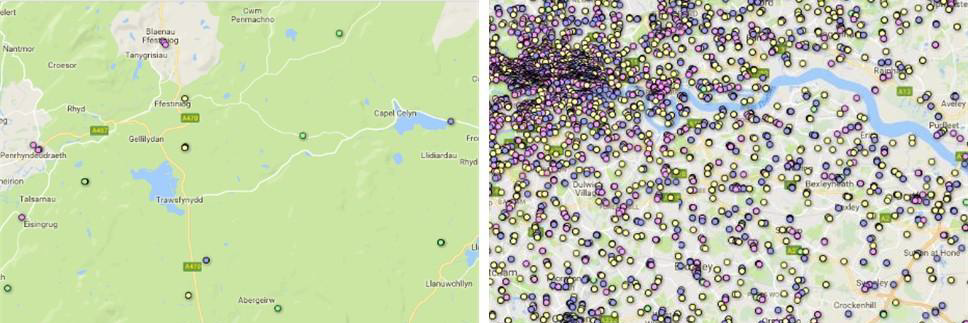
Figure 2.1: Coverage is not the issue in London (right); it’s all about capacity. Both of these areas have good coverage, but it is capacity demand that drives site density demand in London (source: MobileUK)
A new wave of investment in mobile network infrastructure has begun. To comply with the requirements of the 2021 Telecommunications Security Act (TSA), the mobile operators had to divert significant capital investment away from keeping pace with traffic growth to the removal and replacement of Huawei equipment from their core networks. To secure CMA approval of its recent merger, VodafoneThree has made a contractual commitment to an £11Bn network investment programme over the next ten years. This announcement has triggered a response from EE and VMO2, who have their own investment plans and have announced new technologies designed to significantly increase network capacity and coverage. In addition to the ongoing 5G rollout, the operators have all committed to 5G SA rollout (EE intend to reach 99% of the UK population by 2030, VMO2 will reach ‘all populated areas’ in the same timescale, for example) and have wider coverage targets that are often underpinned by contractual commitments.
The Shared Rural Network (SRN) programme – originally a £1Bn programme but revised down to £866M reflecting early achievement of 4G coverage targets – has undoubtedly improved rural coverage in Wales, with 30 rural masts built originally for the Emergency Services Network already upgraded for multi-operator sharing. But coverage challenges remain. Mobile operators rarely share coverage and capacity data. Whilst Ofcom mobile coverage data is now much improved, local authorities in Wales are taking matters into their own hands and paying for third-party coverage data to evidence coverage ‘not-spots’ in discussions with mobile operators. Mobile operators in turn are pointing to Welsh permitted development rights placing more constraints on mobile mast sites than other parts of the UK, reducing the potential coverage that can be achieved. A more collaborative approach between mobile operators, mobile infrastructure providers, local and Welsh Government is needed (see later in Section 2 and Section 5 for more details).
The mix of mast site types of the mobile operators are using is also changing. Rooftop and traditional lattice type towers will remain important, but 20m monopoles are increasingly common in suburban areas. After many false dawns, the need to add capacity in high demand areas (such as transport hubs) and new spectrum bands are beginning to drive the demand for small cell’s (mini-mobile base stations designed to attach to street furniture). Volumes are accelerating; VMO2 have deployed over 2000 small cells and EE have over 1500, with 500 of those being added in just in the last twelve months. Demand for street furniture sites will require closer working between local authorities, the mobile operators and the Mobile Infrastructure Providers (MIPs) that often build small cell sites for the operators.
Mobile Infrastructure Providers (MIP’s) need to be part of the mobile discussion. MIPs – companies like Cornerstone, Cellnex and WIG – own most of the mobile tower and rooftop sites in the UK. Their business model is built around renting space on their sites to the mobile operators. They are incentivised to find coverage gaps, ideally where multiple operators have problems and where they can see a financial return for building a new site operators can share. Without the option to site share, mobile operators are unlikely to act alone to close coverage gaps. MIPs will therefore be key to closing rural coverage gaps. MIPs also play a crucial role in working with mobile operators and council street furniture teams to install small cells (a mini mobile base station designed to attach to street furniture). Swansea Council, for example, has worked with Freshwave, a MIP, and operator VMO2 to install small cells in the city centre to provide additional capacity. MIPs are also starting to deploy ‘neutral host’ small cells that can be shared by all operators, reducing street clutter and offering improved economics over single operator small cells.
Mobile operators are not especially focussed on indoor coverage beyond high footfall venues like transport hubs and shopping centres. Energy efficiency measures (heat reflective films on windows and insulation) required by building regulations and modern construction techniques are making office buildings and MDUs harder for mobile signals to penetrate effectively. MIPs are offering ‘landlord pays’ multi-operator indoor coverage models which are gaining traction in the market. Landlords then recover the cost within the rental charge, much as in-building WiFi is funded already. In London, the GLA previously promoted an ‘outcomes’-based approach that encourages developers and landlords to invest in mobile coverage as well as fibre. The Digital Connectivity Rating Scheme – a partnership with certification company WiredScore – benchmarks connected buildings globally against best-in-class provision. This model could be adopted by Welsh Government.
Welsh Government could seek to benefit disproportionately from this forthcoming wave of mobile investment and step up its engagement with mobile operators and MIPs. Welsh Government should consider a call for evidence to see what can be done, but the mobile operators need to help provide evidence of the coverage and capacity benefits that changes (for example to permitted development rights) will deliver for Wales.
Table 2.2 below summarises the key programmes and policies relevant to digital infrastructure and the role of Welsh Government: -Appendix B provides further details on each.
Of particular note are:
● The Digital Strategy for Wales6 which sets out clear ambitions for digital connectivity and how fast and reliable infrastructure will support the wider social and economic priorities of Wales. It sets out a Digital Vision – “Digital in Wales: improving the lives of everyone through collaboration, innovation and better public services” – supported by six missions, with mission five which focusses specifically on digital connectivity
● Project Gigabit and Shared Rural Network are the UK Government’s flagship broadband and mobile coverage programmes. Both are described in section 3. Section 4 summarises the local initiatives Welsh Government have developed to amplify the impact of these UK-wide programmes.
● Permitted Development Rights (PDR) which are more stringent in Wales than in England and present challenges to the development of the sector are a potential constraint to delivery of improvements. Here, constraints have a direct impact on key ambitions such as rural coverage and add specific complexities to the challenges of site development in Wales relative to the rest of the UK. Given the projected investment in network coverage and capacity from all the operators, Welsh Government should consider how best to close this gap to maximise mobile connectivity opportunities for Wales. This issue was addressed in a 2017 research study for NICW, which concluded that a more creative approach and more collaboration with Planning Authorities was needed7. This issue is addressed in Section 5.
Table 2.2 Key telecommunications policies and programmes and the role of Welsh Government
| Policy/Instrument | Applies in Wales? | Who Controls? | Welsh Government Role |
| Digital Strategy for Wales (March 2022) | Yes | Welsh Government | Sets out key priorities under six missions, one of which is digital connectivity |
| Project Gigabit | Yes | UK Government (DSIT / BDUK) | Local delivery, stakeholder engagement |
| Shared Rural Network (SRN) | Yes | UK Government/Ofcom | Local support, digital inclusion |
| Electronic Communications Code | Yes | UK Government | N/A |
| Telecommunications Security Act (TSA) 2021 | Yes | UK Government | N/A |
| Product Security & Telecoms Infrastructure Act (PSTI) 2022 | Yes | UK Government | N/A |
| Broadband USO | Yes | UK Government/Ofcom | Referral/advocacy for residents |
| Building Regulations (Part R) | Yes (mirrored) | Welsh Government | Set/build local regs, usually aligned |
| Permitted Development Rights (PDR) (Telecoms) | Yes, but devolved | Welsh Government | Sets specifics of planning permissions |
Who is responsible?
Responsibilities for delivering digital infrastructure for Wales sits with an ecosystem of government bodies, the industry regulator, developers and landlords and the operators themselves. Table 2.3 below provides an overview of the key players.
| Organisation | Remit | Role |
| UK Government | Delivering economic growth through monetary policy, management of public finances and setting the strategic direction for public sector bodies | Setting national targets for digital connectivity in the UK Through DSIT, shaping the strategy to achieve digital connectivity targets and providing funding and programme control through BDUK. The Building Digital UK (BDUK)– is responsible for the delivery of Project Gigabit and Shared Rural Network (SRN) BDUK conducts regular Open Market Reviews (OMR) to track commercial Gigabit operator build plans to inform subsidy strategy for properties that have no commercial build plans. UK Government is responsible for legislating to provide supportive and regulating policies such as ECC, TSA, PSTI and USO, aided by Ofcom UK Government directly funds telecoms innovation projects through vehicles such as UK Telecoms Innovation Network (UKTIN) and wider innovation programmes such as UK Research and Innovation (UKRI) |
| Welsh Government | Responsible for devolved areas of public life and delivering national priorities, including health, education, transport and the environment | Setting specific digital strategy for Wales including digital connectivity, aligned with social and economic strategy Providing input to shape UK Government digital policies and programmes Shaping interventions adapted for local conditions and priorities that complement and maximise the impact of UK Government programmes Working with private telecoms companies to support build activities and help with community engagement and also bring focus on areas of poor coverage or capacity to encourage operators to address Piloting digital connectivity innovation supportive of Welsh Government social and economic objectives (for example, IoT networks for smart city applications, agritech and satellite connected buses Legislation in areas such as permitted development rights (PDR) and building regulations are devolved to Welsh Government |
| Ofcom | UK regulator and competition authority for the broadcasting, internet, telecommunications and postal services. | Ofcom is part-funded by UK Government and regulates UK telecoms markets, reporting on industry performance and ensuring that the market is competitive but fair. Ofcom supports UK Government by authoring related policies such as USO and by ensuring operators deliver statutory performance commitments such as the coverage obligations made by the UK mobile operators as part of the Shared Rural Network agreement |
| Local and regional government | Provide a wide range of essential public services to meet local community needs | Setting local planning policies, which can impact operator network build activities Approval of planning applications from operators that sit outside of PDR and ensuring that developers apply building regulations requiring new developments to be Gigabit-ready Building digital infrastructure into Local Development Plan, ideally with a supporting digital infrastructure strategy Providing funding for a Digital Champion as single point of contact for operators and providing local advocacy for digital infrastructure Own a portfolio of site assets that can be useful to mobile operators seeking to address coverage or capacity gaps |
| Private telecoms companies | Businesses that typically build and operate telecoms networks and provide digital connectivity services to consumers and businesses | Private telecoms companies fund, design, build and operate digital networks in commercially viable areas Where network rollout is not economically viable (for example rural areas or some urban areas with challenges like water crossings) private telecoms operators will engage with UK and Welsh government programmes to access state funding to subsidise build activity Private telecoms companies will work with developers to ensure that new properties are delivered with Gigabit capable broadband, often providing funding and consumables to developers |
| Mobile Infrastructure Providers (MIP) | Businesses that own a portfolio of mobile towers and rooftop sites that they then rent to mobile operators seeking locations for their radio equipment | MIPs will work with private telecoms companies (mainly mobile operators) and landlords to provide tower and rooftop sites for operator equipment, securing leases, building and maintaining the sites and ensuring safe operation. |
| Developers | Company that buys land or property and builds residential or commercial properties | Developers are required by the building regulations to work with private telecoms companies to ensure that all new commercial and residential developments are built with the necessary ducting, cabinets and other infrastructure to give buyers access to Gigabit broadband. |
| Landlords | Owners of land or property | Landlords have a two-fold role. They are the owners of land and property that may be required by fixed and mobile operators to build their network infrastructure and are therefore subject to the Electronic Communications Code Landlords consent via a wayleave is required for broadband operators to connect residents in shared dwellings such as blocks of flats or MDUs |
Current State of Play
This chapter provides an overview of the current state of play of digital and communications infrastructure across Wales. It highlights the current problems and issues and identifies key opportunities.
Welsh Government approach
Focussing on high-speed broadband and 4/5G mobile coverage, Wales has made real progress and is now focussed on addressing the needs of very hard to reach rural areas. Welsh Government are also addressing urban areas that have yet to be given access to Gigabit capable services and where mobile capacity is constrained and customer experience suffers as a consequence.
Tables 3.1 and 3.2 below show how Wales is performing against the other nations and the UK as a whole. Wales is acquitted itself well, particularly when compared to Scotland which faces similar challenges of rurality and topology, albeit on a grander scale. Availability of high-speed digital connectivity is however simply an enabler. The real objective is the adoption of these services and how they can transform societies, the delivery of public services and the evolution of current and future commercial activity in Wales, supportive of the six missions set out in the Digital Strategy for Wales .
Table 3.1:Overview of broadband coverage across the UK (source: Ofcom Connected Nations Wales Report 2025)

Table 3.2: Overview of voice and data mobile coverage across the UK (source: Ofcom Connected Nations Wales Report 2025)

A combination of public and private sector investments in broadband and mobile network have ensured that a significant proportion of communities and businesses in Wales have access to high-speed broadband and mobile connectivity. As of November 2025 (Publication date of the latest Ofcom Connected Nations report – see Table 3.3), 79.1% of premises in Wales had access to Gigabit capable broadband and 97.07% had outdoor 4G coverage from all three UK operators. Whilst 5G is still being rolled out by the operators, 91.44% of premises in Wales are already covered by at least one operator and there is no reason to believe that 5G will not mirror the success of 4G.
Table 3.3: Selected broadband and mobile coverage data for Wales provided by Ofcom as part of Connected Nations November 2025

Commercial Gigabit capable broadband investment in Wales
Where digital infrastructure is concerned, government policy is designed to encourage competition and create the market conditions to encourage investors and telecoms companies to fund the deployment of Gigabit broadband (and 4/5G mobile networks). In the case of the UK market, this approach has been very successful. Openreach alone have so far invested £15Bn in rolling out its fibre network to 20M of the UK’s 32.5M premises and expects to reach 90% of premises in Wales. There are over 100 Gigabit broadband operators active in the UK, all competing to gain market advantage by being the ‘first mover’ in their chosen geographical market. Competition brings choice and competitive pricing to consumers and businesses but does not necessarily result in ubiquitous coverage. As is true of the UK as a whole, whilst some rural areas remain poorly served, there is a significant amount of overbuild in high-density locations, particularly along the south coast and the cities of Swansea and Cardiff. In Cardiff, Openreach reported that their ongoing fibre network build now passes 80% of premises (c140,000). VMO2, Ogi, Hyperoptic and Elevate are also active. In Swansea, Netomnia had covered 50,000 premises by March 2025. Openreach and VMO2 are also in the city as well as a smaller Hyperoptic presence.
Despite all this commercial fibre activity, even urban areas have not-spots. These areas are typically places where the geography is particularly challenging, with rivers or other features creating technical and cost barrier for commercial operators. Many fibre operators use Openreach ducts as a fast and cost-effective way to build their networks. Sometimes these ducts can be in poor condition and unusable, leaving operators with the potential cost of installing their own ducts. Figure 3.1 below, taken from Thinkbroadband, is the current Gigabit broadband position in Milford Haven and Pembroke, with yellow dots representing premises with no current Gigabit plan, with Milford Waterfront and Pembroke Docks being specific problem areas. There are also some concerns that there is limited availability of Gigabit broadband in more deprived and therefore less commercially attractive areas, although operators say this is more to do with uncooperative landlords of multi-dwelling units, where lack of wayleave can prevent operators from installing fibre. UK Government have recognised this issue and used the Product Security and Telecommunications Infrastructure Act to amend the Electronic Communications Code to introduce new dispute resolution procedures.

Figure 3.1 Gigabit broadband availability in Milford Haven and Pembroke, yellow dots representing premises with no current or planned access to Gigabit broadband
Regional and local interventions are being focussed on these ‘not spots’. For example, Cardiff Council working with fibre operator Telcom Group used a £7.7M grant from the Welsh Government’s Local Broadband Fund (see section 3.4) to “supply residents and businesses in poorly served parts of the city with ‘hyperfast’ gigabit connectivity…. that lack any commercial upgrade plans for gigabit broadband and suffer from sub-30Mbps broadband speeds”. Whilst UK Government focus has been on all areas where there are no operator commercial plans, rural areas have been an understandable priority. But urban challenges are now getting more focus, which is important, particularly if there is indeed a deprivation related linkage, given the significance of digital inclusion as an enabler of public service delivery transformation.
Whilst there are opportunities to use devolved powers to better support operators network builds, the digital connectivity approach of Welsh Government is both pragmatic and effective. Welsh Government are working with UK Government and national digital connectivity programmes to ensure that Wales gets a fair share of nationwide Gigabit and mobile coverage investment, reflective of the specific rural connectivity challenges Wales faces.
Welsh Government has also been effective in augmenting UK-wide interventions to better meet local needs and conditions. Programmes such as Local Broadband Fund and Access Broadband Cymru (ABC) have already been successful. The recently announced Extending High Speed Broadband Reach (EHSB) project is a deftly scoped intervention that will seek to connect premises that remain out of scope for Project Gigabit and commercial build, but by lowering the performance threshold to 30Mbps, is designed to attract a wide range of technology providers and a variety of technical solutions. Given the rate of data traffic growth in the UK (in common with European countries) is declining, it is not necessarily a concern that the 30Mbps speed target falls short of the common currency of Gigabit speeds. EHSB should deliver a useable broadband service to as many users as possible rather than incrementally extending fibre broadband. With a 30Mbps base service in place, rural customers can wait the inevitable technology improvements and competitive pressures that will bring timely access to Gigabit speed services (As an example of the impact of innovation, Openreach and other fibre operators are now using mini-exchanges installed in existing street cabinets to extend the range of fibre into rural areas). Once the impact of EHSB is clear, Welsh Government should consider a further intervention to address any remaining properties with limited connectivity options. UK Government’s recently launched ‘Sterling 20’ initiative (a partnership with twenty of the UK’s largest pension funds and insurance companies) has already earmarked £40M into expanding fibre broadband coverage in rural areas of Scotland and Northern England. Whilst the mechanisms behind Sterling 20 are not yet clear, Welsh Government should engage UK Government to discuss how the fund might best be applied to any post-EHSB activity.
Creating the right conditions for investment and innovation in broadband and mobile network infrastructure is a significant statement of intent. Vodafone, for example, has committed to invest £11M in its network over the next ten years, as a condition of approval for the recent H3G merger. EE and VMO2 also have significant investment plans . Mobile Infrastructure Providers (MIPs) such as Cornerstone and Cellnex similarly have access to capital to fund the construction of new mobile towers where they see that the mobile operators have a common coverage or capacity challenge.
Making it easier for the telecoms sector to spend money in Wales than in other parts of the UK is the right thing to do. The planning regulations that define how easy it is for mobile operators to build the infrastructure their networks need, is largely defined by Welsh Government, and it is here where Wales is behind the rest of the UK (see section 5). This gap could widen further as at the end of 2025, UK Government published a call for evidence on changes to telecoms planning law (PDR) in England. The consultation is seeking views on a number of key areas which are seen to have the potential to lead to faster improvements in digital connectivity and removing barriers to deployment. Welsh Government has adopted DSIT’s ‘Barrier Busting’ approach and its key recommendations, such as encouraging local authorities to appoint a Digital Champion to provide an interface for telecoms operators to help resolve issues and share requirements.
Developing a Local Plan and supporting Digital Infrastructure Plan are other initiatives that signal a local authority’s intention to engage and support to telecoms operators. 17 of the 22 Local Authorities in Wales now have Digital Champions in place, acting as a single point of contact for operators and supporting community engagement efforts, coordinated through the Welsh Government run All Wales Digital Infrastructure Group. Extending this model to all 22 local authorities and ensuring that digital connectivity is built into all Local Plans with supporting DIP would seem like a logical next step.
Welsh Government Assets
Welsh Government owns a number of fibre optic cable routes. For example:
● The Fibrespeed route along the North Wales coast has been operated by Zayo Networks and is currently in the process of being sold.
● Transport for Wales have set up Ffeibr, an ‘arms-length’ fibre operator, to commercialise the fibre installed as part of the South Wales Metro programme.
● Fibre operator Ogi has used ducting along the M4 and across the Prince of Wales bridge as part of a 70km fibre route to Cardiff. Other assets useful to telecoms companies include street furniture (for mobile network small cells) public sector buildings and land for mobile mast sites and cable ducting laid under cycleways.
The All-Wales Digital Infrastructure Group already shares ‘best practice’ templates such as the Open Access Agreement for street furniture. This federated approach could be applied to a guiding set of principles for other attractive assets like rooftops. The true potential of these assets to assist operators in their network build is unclear, but worthy of a collective review, potentially considering other models. For example, in a recent deal worth an estimated £740M, Network Rail awarded Project Reach to a consortium led by fibre operator Neos. Project Reach includes the rights to build and commercialise trackside fibre and address mobile coverage in tunnels and cuttings. The trackside fibre will be shared with Network Rail who will use the fibre for rail applications, saving taxpayers an estimated £300M.
In addition to Project Reach, UK Government have recently announced a £41M investment in satellite connectivity for mainline trains, which collectively should begin to address the poor mobile experience. Welsh Government have piloted Satellite connectivity for buses (see below) and could consider satellite connectivity for the rollingstock on rail routes outside of the two mainline services that will benefit from UK Government investment. Welsh Government and Transport for Wales also should consider their strategy for the replacement for the end of life 2G-based GSM-R (the current dedicated radio network for rail applications) now that Ofcom have allocated some 5G radio spectrum to be used for track to train type applications that form part of the replacement Future Rail Mobile Communication System (FRMCS) which has the potential to increase the capacity of rail routes through closer train spacing as well as a range of other features.
The Digital Strategy for Wales expressly references Internet of Things (IoT) and 5G innovation. Welsh Government have had a positive impact in supporting digital connectivity innovation specifically aligned to the social and economic challenges of country. Recent trials of satellite connected buses to provide better passenger connectivity and accurate tracking data (critical for infrequent rural services) are pointing the way for future extension to TfW trains, in parallel with the UK Government investment in mainline train satellite connectivity.
Working with mobile operator VMO2, Wave Mobile has combined satellite connectivity with a 5G radio to bring mobile connectivity to the remote South Stack nature reserve on Anglesey. Whilst this model is in the early stages of development, combining satellite backhaul and ‘neutral host’ mobile base station technology (which allows all three mobile operators to use the equipment to connect their customers) has the potential to become a low-cost coverage solution for mobile not-spots.
These satellite backhauled mobile base stations are also easy to move, requiring only power and a mast site, which could be simply a lamp post or building wall. Welsh Government could create a fleet of these satellite base stations and move them as mobile operator coverage improves (or the need for rural not-spot solutions reduces as satellite connectivity is integrated by mobile operator and device vendors – see section 4). For small communities with poor mobile coverage, funding could come from a voucher scheme model with contributions from the mobile industry and the community itself. An extension of the Shared Rural Network (SRN) initiative could be used to address ‘not spots’ on roads and in more remote areas with little or no residential population. Welsh Government should seek to incubate a strategy to develop a viable commercial model.
Welsh Government Intervention in Internet of Things (IoT)
Welsh Government have also encouraged innovation with the Internet of Things (IoT). LoRaWAN is a type of IoT technology that uses open spectrum combined with low-cost open standard equipment that is easy to deploy and manage to build effective IoT networks. Welsh Government have supported a wide range of LoRaWAN pilot deployments, ranging from smart city applications in Conwy, grass growth monitoring at Farming Connect’s Erw Fawr demonstration site, to putting environment sensors into properties managed by Mid-Wales based housing association, Barcud.
Figure 3.2 below shows the extent of consolidated LoRaWAN coverage in Wales today. The mobile operators have their own commercial alternatives to LoRaWAN; technologies like NB-IoT and LTE-M are supported by their 4G and 5G networks, so are an attractive option for businesses who do not want to run their own networks and are looking for ‘carrier grade’ reliability. With the growing momentum of digital twins, more organisations will acquire IoT services to gather real-time data. Welsh Water, for example, are using NB-IoT for their smart meter rollout (other water companies such as Yorkshire Water and Thames Water are using LoRaWAN). One of the capabilities of Welsh Government is that it can convene Welsh businesses. A LoRaWAN network built for water metering could support many other applications, for example. Welsh Government should bring together key private and public sector stakeholders to share connectivity ambitions and explore the possibility of a One Wales IoT network. Such a network could deliver societal benefit as well as creating a platform capable of accelerating the adoption of digital twin solutions in Wales.

Figure 3.2: LoRaWAN coverage in Wales, ‘red’ areas being where a strong signal is available (source: TTN Mapper)
Digital Inclusion
Digital connectivity will underpin the transformation of public service delivery. Addressing digital inclusion (the subject of WG’s mission two) will be a fundamental requirement, ensuring that those who most need to access public services do not face additional barriers when choosing digital channels. Whilst access to digital skills and appropriate devices sit outside of the scope of this review, issues such as the presence of affordable high-speed infrastructure would support Welsh Governments commitment to support people to meet the Minimum Digital Living Standard (MDLS).
The nature of digital inclusion – and the causes of exclusion will change significantly over the next twenty years. Dial-up internet was first launched in the UK in 1992. The first iPhone appeared in 2007. Those born in the 1970’s and now in their 50’s will have lived their adult lives with computers and increasingly, smart phones. Whilst there are other factors that can contribute to digital exclusion, age is a major contributor. Itis reasonable to suggest that over the next twenty to thirty years, todays digitally excluded old-aged cohort will be replaced by a more digitally literate one. Evidence from a digital inclusion study conducted by the Heseltine Institute at Liverpool University suggested that even in low income groups, use of smart phones to access on line banking services and entertainment were common, and that the nature of exclusion was shifting to the higher level digital skills required for work, which may be more related to written language and mathematic skills than use of digital technology. Welsh Government should revisit its own understanding of digital inclusion so that policy interventions are properly founded.
UK Government connectivity programmes in Wales
Project Gigabit Infrastructure Subsidy (GIS)
GIS is the flagship broadband project of UK Government. Up to £5Bn has been committed by UK Government to Project Gigabit which is the cornerstone of the UK’s ambition for a digitally connected society and economy. The focus is to deliver gigabit-capable broadband to as much of the UK as possible, focusing on areas not covered by commercial rollout. The ambition is for 99% of UK premises to have access to gigabit-capable broadband by 2032. The Ofcom Connected Nations Wales report for 2025 shows that whereas 87% of UK premises have access to Gigabit-capable broadband, whereas for Wales the comparable figure is 79.1%, reflective of .its challenging geography, relative rurality and the later phasing of the ‘Type C’ Gigabit contracts that will address Wales.
Type C contracts are cross-regional agreements with a single provider for areas where there was no real market interest. There are six Type-C procurements in all, two of which relate to Wales. Call-off 2 – a £139.1M investment covering West and North Devon, Northwest, Mid- and South East Wales – was awarded to Openreach in June 2024 and will seek to connect 42,000 premises across all target areas. Call-off 3 – covering East and South Shropshire, North Herefordshire, North and Southwest Wales – was similarly awarded to Openreach in December of the same year. Call-off 3 is valued at £108.94M and will connect c47,000 premises.
Gigabit Broadband Voucher Scheme (GBVS)
This UK Government Building Digital UK (BDUK) administered scheme provides grants (vouchers) to help homes and businesses with speeds less than 1Gbps to upgrade to gigabit-capable broadband if they are not included in commercial, Project Gigabit or other publicly funded rollout plans. Vouchers are worth up to £4,500 and 118,000 have been issued across the UK, with 4,600 of those being in Wales . Whilst vouchers can be used for isolated properties, small communities often consolidate vouchers to incentivise a commercial operator to build to their hamlet or village.
Over the last two years, new GBVS have been scaled back to avoid conflict with the major GIS programme, with the voucher scheme limited to parts of Derbyshire, the Isle of Wight and more urban areas such as Greater London, Merseyside, Greater Manchester, Birmingham and the Black Country.
Scaling back of commercial build ambitions by operators refocussing on monetising existing build is a recurring theme, and one Welsh Government need to monitor closely. The starting point for the two Type C contracts for Wales will be where commercial build ends. If operators increasingly retrench their build plans, gaps could open up which will need to be addressed. BDUK working with Welsh Government track this constantly evolving landscape through regular Open Market Reviews (OMR) which are based on the latest data provided by the operator community.
Shared Rural Network (SRN)
RN is a joint UK Government and mobile industry funded programme designed to enhance and extend 4G coverage into partial not-spots (PNS) areas, where there is coverage from at least one operator, and total not-spots (TNS), where there is no coverage at all. The first phase of the project has been delivered early, with 4G from at least one operator now being accessible across 95% of the UK landmass. The second objective is to address TNS, with an objective of 89.2% 4G coverage by the end of 2025.
The mobile operators have invested £532M into SRN, with a further £184M coming from UK Government for upgrades to the Home Office Emergency Services Network towers and with up to £150M allocated for new sites in Scotland, which has the lowest 4G coverage in the UK. The first target has been to address the partial not-spot challenge, which is largely being delivered by adapting single operator mast sites so they can be shared by multiple operators. Wales had previously benefitted from EE investment in single operator sites to support the operators ‘blue lights’ Emergency Services Network (ESN) contract with Home Office. Many of these sites were upgraded for sharing under SRN. 100 Home Office mast upgrades had gone live across the UK, 46 of which are in Wales. All mobile operators have a commitment to increase their 4G landmass coverage to 89.2% by the end of 2027, so collective action should deliver the 2025 target, albeit with partial coverage (i.e. one operator) in some areas.
Whilst there are UK-wide coverage targets under SRN, there are national variations (Table 3.4 below). Wales performs better than Scotland but has work to do to close the gap to England.
Table 3.4: Shared Rural Network 4G coverage progress – November 2025

% figures rounded to whole figures. Pre SRN figures taken from Ofcom 2019 Connected Nations Report published 13 December 2019. Current coverage taken from 2025 Ofcom Connected Nations report published November 2025. Source: Shared Rural Network update https://srn.org.uk/forecast-coverage-improvements/
Welsh Government connectivity initiatives
3.4.1 Welsh Government has successfully built on these key UK Government programmes with a number of focussed initiatives of their own.
Local Broadband Fund
The Welsh Government ran LBF from 2020 until its completion in March 2025 LBF. allocated £12M to help local authorities and social enterprises deliver faster broadband networks to areas and sites that did not have access speeds above 30Mbps. LBF funding was drawn on by City and Regional Deals (see section 3.2 for Cardiff example) and local councils to deliver fibre to underserved areas and to community facilities such as rural libraries, community centres and care homes.
Access Broadband Cymru (ABC)
Access Broadband Cymru (ABC) is a grant scheme similar to the UK-wide GBVS (see above). ABC was first launched in 2013 and resulted in over 14,000 grants being issued. The scheme was paused in August 2024, largely to review the approach to ensure that it continued to meet evolving business and residential requirements and to refresh back off systems and processes.
With the Type C GIS contracts that cover Wales now awarded, there is greater clarity of the premises that will fall outside of the BDUK funded intervention area, which has allowed Welsh Government to re-open the scheme, albeit with some changes. The revised ABC is also designed to work alongside the recently announced Extending High Speed Broadband Reach (EHSB) project (see below).
A £1M annual budget has been allocated to fund grants of £800 (split £550 for equipment and £250 installation). Any technology solution is acceptable as long as it can deliver a minimum speed of 30Mbps. Recent reductions in Starlink satellite broadband pricing (now £35 per month) means that the exclusion of recurring monthly fees from costs the grant can be used to offset is no longer an issue.
Extending High Speed Broadband Reach (EHSB) project
The same clarity that has allowed Welsh Government to refresh ABC has allowed Welsh Government to set out a timetable for its Extending High Speed Broadband Reach (EHSB) project, which has been under development since early 2023. EHSB will use the £70M ‘clawback ’ from Openreach and the Superfast Cymru project to target areas – largely very rural or very hard to reach (VHTR) premises that remain outside of operators’ commercial build plans and Openreach build funded as part of Project Gigabit. It is expected that 25-30,000 premises will be in scope for EHSB.
However, the aim of EHSB is a pragmatic one; rather than attempt to uplift every premise to Gigabit speeds, the project is tasked with delivering connection speeds of ‘at least 30Mbps’. Whilst 30Mbps might appear unambitious, it is a bold measure that will ensure the widest range of technologies – including FWA and Satellite – are in scope, so delivering the broadest market engagement. It is also worth noting that reports by industry consultancy LightReading has noted that the rate of growth in UK data traffic is slowing in line with the European wide trend noted by Analysis Mason (see Figure 3.3 below) so at the very least a 30Mbps minimum speed will ensure that more people get a useable interim service before the economics of fibre improves to the point where more hard to reach premises are economically addressable, or for satellite commercials to improve and FWA to deliver on its Gigabit-capable promise. It may be worth considering a more ’outside-in’ approach to EHSB or any successor project; rather than building out from the existing fibre footprint, consider directing funding towards those most remote locations (potentially with additional incentives for farms) that will be at the back of the queue waiting for the connectivity to build outwards.
Figure 3.3: Growth rate in fixed data traffic per subscriber, average across EU (Source Analysis Mason) vs LightReading review of change in underlying UK data consumption derived from Openreach data:

3.4.8 The next step in the process is to create a framework of operators capable of delivering to EHSB candidate premises, then to offer a series of competitive call-off contracts, with the first expected in the Summer of 2026.
Infill and anchor tenancy
Wales has two City Deals (Cardiff Capital City Deal Regional Deal and Swansea Bay City Deal) and two growth deals (North Wales Growth Deal and Mid Wales Growth Deal). Digital connectivity, with improvements in mobile and Gigabit-capable coverage, digital inclusion and focussed initiatives such as precision farming, telemedicine and 5G pilots are a consistent feature of all four Deals.
Deal funding has been used to address areas of low-speed broadband in urban areas as well as connect hard to reach premises within regional boundaries. Connecting public sector sites with fibre not only enables public sector service transformation and new service delivery models, it also encourages the geographic propagation of fibre networks, reducing the cost of connecting residential areas and businesses close to the public sector sites that sit on the new fibre spine.
The Swansea Bay City Deal is a £1.3Bn regional partnership between local authorities, universities, and the private sector, aimed at driving economic growth and transformation in Southwest Wales. In 2021 UK and Welsh Governments gave their approval for a £55m digital infrastructure investment package, aimed at expanding Gigabit capable broadband and 5G coverage in the region. Under the Digital Infrastructure Programme (DIP), contracts were awarded to Openreach (£9.8M for the Better Broadband Infill project to connect 1800 hard to reach premises in the region) and VMO2 Business (A fibre network to connect 36 public sector sites ranging from local authority owned locations to health services and universities).Openreach have also delivered a £150,000 DIP project to deploy fibre across Margam Park (Neath Port Talbot), which will also reach homes in the surrounding area.
Cardiff Council have used £7.7M from Welsh Governments’ Local Broadband Fund to improve speeds in poorly served parts of the city. The selected supplier – Telecom Group – have delivered “free for life” gigabit-capable broadband to fifteen community centres and are also providing a social tariff to support the Cardiff’s digital inclusion objectives as well as promising local job creation.
In June 2025, the preliminary market engagement notice was issued for PSBA3. The Public Sector Broadband Aggregation (PSBA) Wide Area Network (WAN) is funded by £12.5M pa Welsh Government funding and connects 110 organisations, 640 GP surgeries and 5,000 public sector sites across Wales. BT replaced Logicalis as the incumbent supplier in 2014. Market engagement has recently begun on a £700M procurement which will award in October 2028 for the period to October 2033 with a possible extension beyond that. PSBA3 is an ideal opportunity for Welsh Government to extend the anchor tenancy impact of PSBA to challenge areas that still have no clear path to Gigabit broadband and to locations which could help mobile operators address local coverage gaps.
Future Vision
Digital Strategy for Wales sets out a Digital Vision – “Digital in Wales: improving the lives of everyone through collaboration, innovation and better public services”
Whereas Gigabit-capable broadband is a clear priority of UK Government with £5Bn committed to the ambition of 99% coverage by 2032, investment in mobile has largely been enabling policies such as the Electronic Communications Code and a potential £334M contribution to the Shared Rural Network (SRN) project. Welsh Governments focus is similarly Gigabit broadband-centric, with interventions such as LBF, ABC and the forthcoming EHSB all focussed on fixed broadband.
There is scope for Welsh Government to do what UK Government is not doing, and champion the ambition not just for ubiquitous mobile coverage but to address the growing urban capacity needs. The timing is right; operators are beginning a new phase of significant capital investment in their networks, and 5G and 5G Standalone are being rolled out. 6G will follow in the early 2030’s. As with all ‘generations’ of mobile technology, 5G SA and 6G promise to be transformative, but even if only a handful of the AI-driven, haptic and holographic aspirations are met, 6G may at be the Generation that delivers. With its constraining planning rules, mobile operators would unjustly feel that Wales starts on the backfoot. But Wales small size is a real advantage. If this vision of Wales as the mobile champion is one that Welsh Government believe is of value, Welsh Government can convene its 22 local authorities and key public and private sector stakeholders to engage with the mobile industry and shape and execute an integrated programme.
Welsh Government has already demonstrated a positive attitude to satellite technology and its significant potential for rural communities. Welsh Government has the opportunity to be at the forefront as UK Government support as the technology matures and satellite becomes a viable answer to rural mobile not spots , not just for troublesome hard to reach broadband locations.
This same convening capability should be applied to exploring the potential for a consolidated national approach to the Internet of Things data collection capability and the Digital Twins that will feed from this data; is there an opportunity to build once, allowing individual organisation needs to be met, whilst at the same time sharing common interest data sets and creating new opportunities by simplifying data sharing between industries or departments. For example, farming and agritech data (from abstraction to chemical application) would be a valuable input for a digital twin run by the new regional water system planner role envisaged by the recent Cunliffe report, helping to bring together the fragmented stakeholder ecosystem to optimise water resource management. Without a common framework, these benefits will be costlier and more complex to achieve.
Data centres need multiple diverse high speed low latency fibre connections to connect to national and international data centre clusters and internet exchanges where operators interconnect and connect to intercontinental fibre routes. The South Wales and North Wales AI Growth Zones are proving attractive to global data centre operators which in turn will encourage further operator fibre investment.
Ubiquitous digital connectivity will neutralise many of the challenges of distance for the rural communities of Wales, conveniently delivering increasingly digitally delivered services to the doorstep. Digitally delivered health and social services will be easier to access and will deliver better outcomes than ‘in-person’ dependent models and will become the norm, reducing delivery costs.
Digital connectivity will go beyond championing the mobile cause and having delivered ubiquitous Gigabit-capable broadband and mobile coverage, Welsh Government will pivot attention from ‘building’ digital infrastructure to ‘leveraging’ it.
Competition between operators and different technology platforms will drive affordability and access, which will no longer be factors contributors to digital exclusion. Growing familiarity with digital connectivity and services will help to make digital exclusion a thing of the past.
Future Challenges – Short Term
2030 – the start of this ‘short term’ 5–15-year window – is an important year for digital connectivity. By 2032, UK Government should have achieved its target of 99% of premises in the UK having access to Gigabit broadband connectivity. There is also an intention to have 5G Standalone network coverage available in ‘all populated areas’ by 2030. Both of these commitments are supported by Welsh Government. What is not defined by DCMS is how the 1% Gigabit-capable shortfall will be distributed amongst the home nations. 1% equates to c350,000 premises across the UK that will not have access to Gigabit broadband, which could be significant for Wales if that burden were to fall disproportionately.
By 2030, 6G will be either in the process of being rolled out or not too far away, depending on the degree of optimism applied to a technology still proceeding through the various standards bodies. Supporting network deployment is one an important first step, but adoption of new technology especially by businesses is critical to achieving growth and productivity improvements . More needs to be done to support Welsh business in exploring how new digital technologies can help them develop new business models. Whilst there are UK programmes to encourage experimentation with new technologies, Welsh Government has a role to play in supporting strategically important industries and helping to bring together effective consortia with UK and focussed Welsh Government funding opportunities.
2030 is also a significant milestone for the rail sector in the UK. Suppliers of the existing track-to-train GSM-R radio equipment have so far committed to support their equipment until 2030. Whilst a further extension beyond 2030 is not unthinkable, reliability may suffer, with a consequential impact on rail services. Prompt action on FRMCS (the 5G successor to GSM-R) as part of a wider rail corridor connectivity strategy will prevent any undesirable consequences.
Planning and Permitted Development Rights
As noted above, planning is a devolved issue and Permitted Development Rights (PDR) in Wales have significant implications for mobile operator build plans and the coverage and network performance for mobile users in Wales. This is likely to be an increasing constraint into the future and one which will need specific action in the short term to enable telecommunications improvements (but recognising the need to ensure development is appropriate).
Mobile Infrastructure Providers (organisations such as Cornerstone, who build and operate many of the mobile mast sites shared by the mobile operators) and the mobile operators themselves have remarked on the relative harshness of the planning constraints placed on infrastructure upgrades in Wales compared to the rest of the UK and have been lobbying Welsh Government for alignment. Table 5.1 below summarises some of the key differences. At the same time, Welsh Government noted that the mobile operators, despite being asked, have not evidenced the coverage and capacity upside that would follow from changes to Welsh PD.
The variances might not seem significant, but height restrictions can limit the rural coverage that can be achieved from a site, and in urban areas, can be a significant inhibitor to the deployment of 5G. 5G has larger exclusion zone requirements than previous technology generations, meaning that 5G antenna need to be mounted higher to maintain public safety. In urban areas, operators are commonly upgrading monopole mast sites to 20m (see Figure 5.1), which outside of unprotected areas, would need full planning permission in Wales. With prior approval, a monopole site can be upgraded in one month; a full planning application can take three months and twelve with appeal. Width restrictions make it harder for sites to be expanded to allow operators to share sites, which result in the need for more adjacent urban sites or reduced multi-operator coverage in rural areas. Welsh Government say there are valid reasons for this variation, for example, the three national parks and five Areas of Outstanding Natural Beauty account for about 20% of Wales’ land area, where taller masts would be visually jarring.
Figure 5.1: Mobile networks rely on a mixture of site types to meet coverage and capacity demands

There are also real challenges in urban areas just for operators to maintain their existing rooftop sites. Perversely, the Electronic Communications Code (ECC) which was designed to help operators secure the sites they need has reduced rental payments to landlords and removed the incentive to host mobile operators. In London, industry body MobileUK estimates that 7% of operator sites have been put at risk by landlords initiating ‘Notice to Quit’ procedures to the mast operator. Whilst we do not have figures for Wales, major urban areas such as Swansea and Cardiff will face the same challenges. This urban challenge is amplified by the pockets of Conservation Area designation attached to parts of the economic core of most town and city in Wales, creating further barriers to deployment and investment.
UK Government is about to consult once more on how it can reduce friction points for operators, so this gap is likely to grow without a response from Welsh Government. Welsh Government should consider running its own Call for Evidence, formalising the requirement for operators to quantify the impact their proposed changes would have on mobile coverage and capacity.curement requirements in public-sector contracts
Table 5.1: Limits of permitted development height and width of mobile mast upgrades in UK
| Wales | England | Scotland | NI | |
| Upgrade Height (Inside Designation) | Reg 5 for replacement up to 20m on protected land. | Reg 5 for replacements up to 20m in designated areas | Reg 5 for replacement if… Existing mast no greater than 30m where new mast will not exceed original height by more than 50%. Existing mast between 30-50m where replacement would not exceed 50m. Existing mast greater than 50m where increase is 20% or less. | Reg 5 for replacement if… Existing mast no greater than 20m – new mast will not exceed original height by 7m to a max of 25m. Existing mast between 20-50m where replacement increases height by no more than 5m. Existing mast greater than 50m where increase is 15% or less |
| Upgrade Height (Outside Designation) | Reg 5 for replacement up to 25m on unprotected land. | Reg 5 for replacements up to 25m outside designated areas | Same as inside designated areas | Same as inside designated areas |
| Upgrade Width (Inside & Outside Designation) | Limit on width increase of 33% or 1m, whichever is the greater | Limitation on width increase of 66% increase on existing <1m or (the greater of) 50% or 2m if existing >1m | Limitation on width increase of 50% of existing or 2m, whichever is the greater | Limitation on width increase of 1/3 of existing or 1m, whichever is the greater |
Identifying and closing mobile coverage gaps
One of the challenges when attempting to close mobile coverage gaps has been the accuracy of mobile coverage data. Whilst Wales has benefited from SRN , SRN intervention areas were largely chosen by Ofcom on the basis of coverage data provided by the operators themselves. This data was based on a low-resolution theoretical calculation, rather than actual measured performance. This meant that actual user experience, reflective of the real-world loss or degradation of service caused by details such as dips in the road or the shadow of a hill, were not captured by Ofcom data and therefore not part of SRN thinking. Not-spot gaps are a very familiar issue in rural Wales and will require particular attention/focus in the short term.
With Ofcom coverage data being historically poor, local and regional authorities have looked for other sources to add to the anecdotal evidence from residents and businesses. Whilst Ofcom’s mobile coverage data has improved significantly this year , authorities continue to turn to providers like Streetwave who attach radio equipment to refuse vehicles to measure operator signal strength as the vehicles drive their regular rounds. Whilst this approach has its limitations (complex process to install and maintain equipment, measurements only happen during the regular scheduled time, so may not be reflect peak demand, cost) it gives local authorities a more granular picture of the coverage and capacity challenges communities face and a set of data to engage mobile operators with, hopefully encouraging action to close gaps.
The mobile industry itself uses Android ‘crowd sourced’ coverage and capacity data from 3rd party providers. Android handsets make up c45% of the UK market, so provide a good proxy for overall user experience. Many applications, with user consent, share massive amounts of anonymised signal readings with crowd sourced providers to help the mobile industry measure and improve network performance.
Mobile Infrastructure Providers (MIP’s), companies like Cornerstone, Cellnex and WIG, own most of the mobile tower and rooftop sites in the UK. Their business model is built around renting space on their sites to the mobile operators. MIP’s have previously shared mobile industry crowd sourced data for free with local authorities, so would potentially be willing to work with Welsh Government. Mapping detailed coverage and capacity not-spot data against public sector site assets could help operators – supported by MIPs – address coverage gaps or even inform new locations for inclusion in PSBA3, bringing fibre to a public sector owned site that could address specific not-spots.
Mobile Infrastructure Providers (MIPs) need to be part of the mobile discussion. The business model of a MIP is built around renting space on their mast and rooftop sites to the mobile operators. They are incentivised to find coverage gaps, ideally where multiple operators have problems and where they can see a financial return for building a new site operators can share. Without the option to site share, mobile operators are unlikely to act alone to close coverage gaps in rural areas, which are difficult to justify from an economic perspective. MIPs enable site sharing and will therefore be key to closing rural coverage gaps.
MIPs also play a crucial role in working with mobile operators and council street furniture teams to install small cells (a mini mobile base station designed to attach to street furniture). Swansea Council have worked with Freshwave, a MIP, and operator VMO2 to install small cells in the city centre to provide additional capacity. MIPs are also starting to deploy ‘neutral host’ small cells that can be shared by all operators, reducing street clutter and offering improved economics over single operator small cells.
Welsh Government should consider meeting with MIPs already active in Wales and the MIP industry body Mobile Infrastructure Forum to explore the possibility of data share and the value of a public sector site mapping exercise. MIPs should also be part a Call for Evidence regarding changes to PDR, should Welsh Government choose to undertake that exercise.
Future Challenges – Medium and Long Term
Predicting technology change and the implications for connectivity (and for society) are difficult to predict in the medium term, let alone the long term.
A good example is 6G, which will arrive in the early 2030’s. 6G use integrated AI to deliver new services such as augmented and virtual reality, holographic communications and entertainment as well as supporting haptic capabilities such as remote surgery. It will use new spectrum bands and will require much denser networks, so many small cells are predicted. The integration with AI may have implications for cloud computing, requiring edge processing closer to the user rather than simply relying on massive, centralised data centres. 6G will also seek to integrate with 5G, WiFi and satellite networks for pervasive coverage. How many of these features remain aspirational is too early to tell.
Technology decisions and network investment are best undertaken by the operators themselves, with governments primary responsibility being to create an environment supportive of the needs of operators building their networks and providing subsidies where economics do not support a commercial rollout.
Key Challenges and Next Steps
This section provides an overview of the challenges facing the digital sector in Wales. It considers both immediate pressures and long-term trends to ensure that responses are strategic and forward-looking.
Table 7.1 identifies the most significant cross-cutting issues and opportunities with the most far-reaching consequences for the sector. For each issue, it outlines pathways for Welsh Government to explore further or progress, including areas for research, policy development, and collaborative action.
The issues shown in Table 7.1 were assessed using a prioritisation framework which considered:
● Cross sector benefits – this considered the extent to which tackling the issue would benefit the Water, Energy, Transport, or Circular Economy infrastructure sectors also considered by this review.
● Relevance to NICW remit – in particular looking at whether the issue identified fits within NICWs remit to consider long-term issues, and whether NICW could be able to add value/influence.
● Contribution to/alignment with the 7 Well Being goals
● Stakeholder acceptability, and whether the issue correlates well with feedback from stakeholders
● Deliverability, considering whether the issue is realistically deliverable
● Cost and benefit
The issues which ranked the highest in this prioritisation exercise are shown as first part of Table 7.1. Whilst all the issues identified in this review are important it is recommended that Welsh Government consider acting on these top priority issues
Table 7.1 – Priority issues and potential actions for completing digital connectivity infrastructure build in Wales
| Priority Issue | Pathway | Timeline | Headline data against which to measure progress |
| Top priorities | |||
| UK Government has championed the cause of Gigabit connectivity but has been less engaged with the challenge of mobile coverage and capacity. This creates an opportunity for Welsh Government to become vocal champion of mobile connectivity, catching the significant wave of capital investment unleashed by the VodafoneThree merger. | Welsh Government should evaluate this opportunity and its potential impact for Wales. | Short Term | No current suitable metric. Could periodically interview mobile industry players |
| Individual organisations in Wales are pursuing their own IoT strategies. This might be the right approach but one common IoT platform for Wales could potentially support both private and public sector applications | Welsh Government should convene the key public and private sector stakeholders to understand IoT requirements to assess the opportunity for a shared national IoT platform as a foundation for digital twins and smart infrastructure | Short Term | No current suitable metric. Potential to map all individual networks and technologies |
| More work is required to understand how satellite could provide long term connectivity options for hard-to-reach locations, potentially saving significant subsidy costs over todays prevalent models. Satellite market is maturing rapidly with support from UK Government. | Welsh Government to develop a medium-long term strategy for satellite connectivity. Welsh Government is already experimenting with satellite and could consider positioning Wales as the UK living laboratory for the technology. | Short Term | No current suitable metric |
| Commercial fibre operators have been scaling back and/ delaying their commercial build plans to focus on monetising existing network. This risks areas being left without either a commercial build or a subsidised build | BDUK carries out regular Open Market Reviews which it shares under NDA with Welsh Government. The OMR reflects the latest build updates from the commercial operators. Welsh Government monitor the results closely and work with the operators active in Wales to identify where any corrective intervention might be needed | Short Term | BDUK/WG Open Market Review data |
| Extending High Speed Broadband Reach (EHSB) is designed to offer a pragmatic stopgap 30Mbps broadband service to as many remaining hard to reach premises as possible supporting the UK target of 99% of premises to be Gigabit connected by 2030 (or even maintaining interim solutions like FWA) This approach will likely require further investment. | Once the impact of EHSB is clear, Welsh Government will have a clear view of what remains to be done and should consider a further intervention, possibly seeking UK Government Sterling 20 funding, which has already nominally allocated £40M to rural broadband in the North of England and Scotland. | Short Term | BDUK/WG Open Market Review data |
| Welsh Government have adopted the ‘Barrier Busting’ strategies developed by DSIT. 5 of the 22 local authorities in Wales do not have a digital champion to provide a single point of contact and local support for operators, which can slow build activity. | Welsh Government already co-ordinates the existing Digital Champions through the All-Wales Digital Infrastructure Group but should encourage the remaining 5 authorities to nominate their own Digital Champions. Local Plans should also be reviewed and digital added at the next rewrite where it is not already included | Short Term | WG through All-Wales Digital Infrastructure Group |
| Other priorities | |||
| Mobile operators and Mobile Infrastructure Providers believe that Welsh PDR rules are too restrictive and reduce the coverage and capacity sites can offer | Welsh Government should issue a Call for Evidence for operators to demonstrate the capacity and coverage upgrades that proposed changes would deliver for Wales | Short Term | No current suitable metric. Could periodically interview mobile industry players |
| Mobile coverage and capacity data is not readily available, so it is difficult to evidence coverage not-spots or urban areas which lack sufficient capacity | MIPs can facilitate the sharing of highly accurate crowd-sourced data (which is also used by mobile operators) with local authorities and may well do the same with Welsh Government. Welsh Government to meet with MIPs to discuss access to the crowd-source data and to engage in a joint planning exercise | Short Term | Develop new tracker working with MIP’s |
| It is costly for mobile operators to address rural not-spots when new mast sites are required | Welsh Government should work with the 22 local authorities to map public sector sites which can then be cross-referenced with mobile not-spots to understand how public sector sites might be useful in addressing mobile not-spots | Short Term | No current suitable metric. |
| Shared MIP masts can reduce the cost for a mobile operator to address a coverage gap, but MIPs are not normally part of the mobile operator – Welsh Government mobile discussion | The MIP business model is to build masts, ideally where multiple operators have coverage or capacity problems. Renting space on a shared MIP mast would be cheaper than a dedicated operator mast, so is more likely to result in a viable rural mast site. Welsh Government should bring the MIPs into the coverage and capacity discussion, sharing public sector site details which MIPs could use | Short Term | No current suitable metric. |
| Access to fibre backhaul is also important for mobile mast sites. Whilst microwave can be used to daisy-chain rural sites, this is not always possible due to line-of-sight issues. Getting fibre as close to rural sites as possible is an important issue | Whilst PSBA3 is essentially an aggregation of public sector connectivity requirements, Welsh Government could consider requesting connectivity to public sector sites close to mobile coverage not spots (identified via the above process) in the forthcoming procurement | Short Term | No current suitable metric. |
| More needs to be done to understand and address digital inclusion as key enabler for the digital transformation of health and social service delivery. Recent studies referenced in this paper indicate that the nature of digital inclusion has evolved beyond the historical ‘skills, device, access’ perspective. | Welsh Government should review its understanding of digital inclusion and how that is changing. Age is a significant factor in digital inclusion. Over the next ten years the current old age cohort will be replaced by a digitally aware one, for example. | Short Term | National Survey for Wales |
| More needs to be done to co-ordinate assets. Welsh Government owns a range of digital connectivity assets. (Fibrespeed is in the process of being sold). Ffeibr is owned by Transport for Wales but operates in the commercial market. There are also central and local government site and ducting assets that could be of use to operators seeking to build networks. The approach appears to be fragmented and opportunistic. | Welsh Government should consider a review and developing a coherent strategy | Short Term | No current suitable metric |
| More needs to be done to coordinate digital technology for rail. There are UK connected railway initiatives (e.g. Reach, satellite mainline trains and FRMCS) as well as TfW activities (e.g. Ffeibr) which would benefit from a consolidated strategic review for rail corridor connectivity in Wales, | Welsh Government working with Transport for Wales should agree a future strategic path for connectivity on the rail network | Short Term | No current suitable metric |
| Welsh Government have supported a DSIT funded trial of a mobile small cell with satellite backhaul as a coverage solution for remote mobile not-spots. This is a clever idea and one with the potential to become a viable method for improving mobile coverage for remote communities and not-spots. | Welsh Government should use the not-spot mapping that an engagement with the MIPs could deliver (see above) to produce a concept and outline business case, also considering the potential impact of satellite being directly integrated into handsets and future technologies such as 6G. Welsh Government should the engage with Scottish Government (who have the same requirement and where Strathclyde University have developed similar technology) to develop into an SRN 2.0 proposal to be shared with DSIT. | Short Term | No current suitable metric |
Monitoring Progress
Going forward it will be important to monitor progress of the digital and telecoms sector over time. It is recommended that Welsh Government monitor a range of data existing overarching data sources over time, with a focus on those listed in Table 8.1 below. As individual projects are taken forward it would be important to consider more detailed and SMART specific objectives.
Table 8.1: Existing data
| Issue/indicator | Why important | Who collects this data? | How often is this published / updated | Is this data publicly available? |
| Coverage – Connected Nations Report and Connected Nations: Wales Report | Provides information on progress against broadband and mobile coverage targets and allows performance of Wales to be compared with other home nations. Provides adoption rates for fibre broadband | Ofcom | Annual but with quarterly updates | Yes |
| Commercial rollout – Open Market Review | Most accurate picture of Gigabit and commercial rollout – and as yet unserved addresses | BDUK shared with Welsh Government | Every four months | Yes |
| OMR – Thinkbroadband Map | Useful mapping resource showing latest OMR data | BDUK shared with Welsh Government | Every four months in line with OMR | Yes |
| Mobile coverage checker | Mapping of mobile coverage and performance to 50m pixel level of detail | Ofcom | No update frequency provided apart from ‘regularly’ | Yes |
In addition to the above, the following key data gaps are noted and it is recommended that Welsh Government consider, as a priority how improved data in these areas could be collated and monitored going forward.
Table 8.2: Data gaps
| Indicator/data needed to demonstrate status/track progress | Who should collect this data in future | How often should this data be published / updated |
| Mobile not spots and capacity challenge areas in Wales; prioritisation and progress in resolving | Welsh Government working with third party information providers who provide mobile operators and Mobile Infrastructure Providers with supplemental coverage data | Quarterly |