

Nature as a Stakeholder:
A Case Study of the National Infrastructure Commission for Wales’ Nature Guardian Pilot – Elspeth Jones
Executive Summary
In 2025, the National Infrastructure Commission for Wales (NICW) undertook a six-month pilot to test a novel governance intervention: the appointment of a “Nature Guardian” to participate directly in Commission discussions. The pilot was not intended to produce immediate policy change, nor to offer a definitive model for nature-centred governance. Instead, it was designed as a practical experiment — a way of exploring what happens when nature is treated not only as an object of policy concern, but as a stakeholder with a voice in decision-making.
This case study documents why NICW chose to run the pilot, how it was designed and implemented, what has begun to shift as a result, and what challenges and open questions remain. Drawing on Commissioner reflections, facilitated workshops, survey responses, and parallel theoretical work, it situates the pilot within Wales’ distinctive legal and cultural context and within a wider international movement exploring new ways to represent non-human interests in governance.
The central finding is not that the pilot has “solved” the challenge of delivering better outcomes for nature, but that it has triggered the forging of a new path – altering how questions are asked, how trade-offs are surfaced, and how responsibility is understood. The presence of a Nature Guardian moved nature from being a background consideration to something explicitly present in the room. This shift was subtle and uneven – but real.
It is important to acknowledge that this kind of governance experiment does not readily produce the direct, tangible outputs typically expected under a Treasury Green Book-style appraisal framework. For organisations accustomed to demonstrating impact through quantified costs, benefits and delivery milestones, this may be perceived as a risk and a barrier to adoption. However, in the context of the nature and climate emergencies — where failure to change decision-making processes is itself a material risk — investing in governance approaches that reshape how decisions are made, even without immediate measurable outcomes, is arguably both justified and necessary.
The experience offers valuable lessons for other boards and public bodies considering similar approaches, particularly around design, legitimacy, plurality, accountability, and learning.


Why NICW Tried This
The National Infrastructure Commission for Wales is an independent, non-statutory advisory body established in 2018 to provide impartial, long-term advice to Welsh Ministers on Wales’ strategic economic and environmental infrastructure needs over a 5–80 year horizon. As a advisory body, NICW does not take decisions on specific infrastructure projects in Wales or set policy. Rather, it engages in exploratory work and research, which inform recommendations that are made to Welsh Government.
Its remit explicitly requires it to consider the climate and nature emergencies and to work within the frameworks of the Well-being of Future Generations (Wales) Act 2015 and related environmental duties.
In October 2024, NICW published Building Resilience to Flooding in Wales by 2050, a report that made a series of recommendations aimed at addressing the escalating impacts of climate change and flooding. One recommendation stood out for its ambition: that nature should be recognised as a stakeholder in decision-making, with mechanisms put in place by 2028 to give nature a voice “around the table”, including consideration of legal reforms to enshrine the rights of natural assets in decision-making processes.
In responding to the Welsh Government’s reaction to the flooding report, Commissioners reflected on a familiar frustration. Despite strong policy frameworks and repeated commitments to nature recovery, there was no sign of nature loss is Wales slowing down, and nature often remained marginal in practice — considered through impact assessments, mitigation measures, or environmental constraints, but rarely as something with standing in governance itself. Nature was everywhere in principle, but nowhere in the room.
The Nature Guardian pilot emerged from this moment of reflection. Rather than waiting for statutory reform or external mandates, NICW chose to test what it could do within its own governance. The question was not “how do we protect nature better?”, but “what changes when nature is explicitly present as a participant in our deliberations?”
What Is a Nature Guardian?
The Nature Guardian role was conceived as a way of “listening to nature from within” an existing governance structure, rather than as an external advisory or advocacy function. It differed from conventional environmental expertise in three important ways.
First, the role was explicitly representational rather than technical. The Nature Guardian was not appointed to provide specialist advice on ecology or environmental law (though such expertise could be drawn on), but to speak for nature as a stakeholder affected by infrastructure decisions.
Second, the role was embedded in the Commission’s deliberative processes. The Nature Guardian participated in meetings, discussions, and reflections alongside other Commissioners, rather than providing parallel commentary from outside.
Third, the role was framed as provisional and exploratory. From the outset, NICW acknowledged the philosophical and practical difficulty of a single human claiming to represent “nature”, understood as a complex, plural and dynamic set of ecosystems, species, processes and relationships. The pilot was therefore as much about surfacing these tensions as resolving them.
This framing aligned the pilot with broader debates in political theory, environmental governance, and the international Rights of Nature movement, while remaining grounded in NICW’s specific institutional context.

Wales: A Distinctive Context for Experimentation
The decision to run the pilot was shaped by Wales’ particular cultural, legal, and institutional landscape. Wales was the first country in the world to legislate for the well-being of future generations, embedding long-term thinking, prevention, integration, and collaboration into public decision-making. The Environment (Wales) Act 2016 also places a statutory duty on public authorities to maintain and enhance biodiversity and promote ecosystem resilience. More recently, programmes such as the Nature Networks Fund have sought to operationalise nature recovery at scale.
Alongside these legal frameworks sits a deep cultural relationship with land, landscape, and nature, reflected in language, literature, and place-based identity. This combination of statutory duty, cultural resonance and the current state of nature in Wales, created a context in which experimenting with new forms of nature representation was not only permissible, but arguably consistent with Wales’ broader governance ambitions.
At the same time, NICW’s non-statutory advisory status imposed clear constraints. The Commission does not make binding decisions or deliver infrastructure; it makes recommendations to the Welsh Government. Any pilot would therefore operate primarily through influence, culture, and framing, rather than through direct control over outcomes. This limitation became an important feature of the learning.
Designing the Pilot
The Nature Guardian pilot was designed as a six-month experiment, running from June to December 2025. Several design principles guided its implementation.
Proportionality and consent. Commissioners agreed collectively to trial the role, with an understanding that it would be reviewed and could be discontinued if it proved unhelpful.
Clarity of purpose. The pilot was framed as a learning exercise, not as a statement that NICW had “solved” the challenge of representing nature.
Independence. The Nature Guardian was appointed as a distinct role, rather than asking an existing Commissioner to take on the function alongside their other responsibilities.
Reflection and evaluation. NICW set out to gather qualitative evidence of impact through reflective logs, a confidential survey of Commissioners, and a facilitated workshop at the end of the pilot period.
In parallel, NICW commissioned Lawyers for Nature to explore the theoretical and practical challenges of nature representation in public-sector governance, and to distil principles that might guide future experimentation.
How the Pilot Worked in Practice
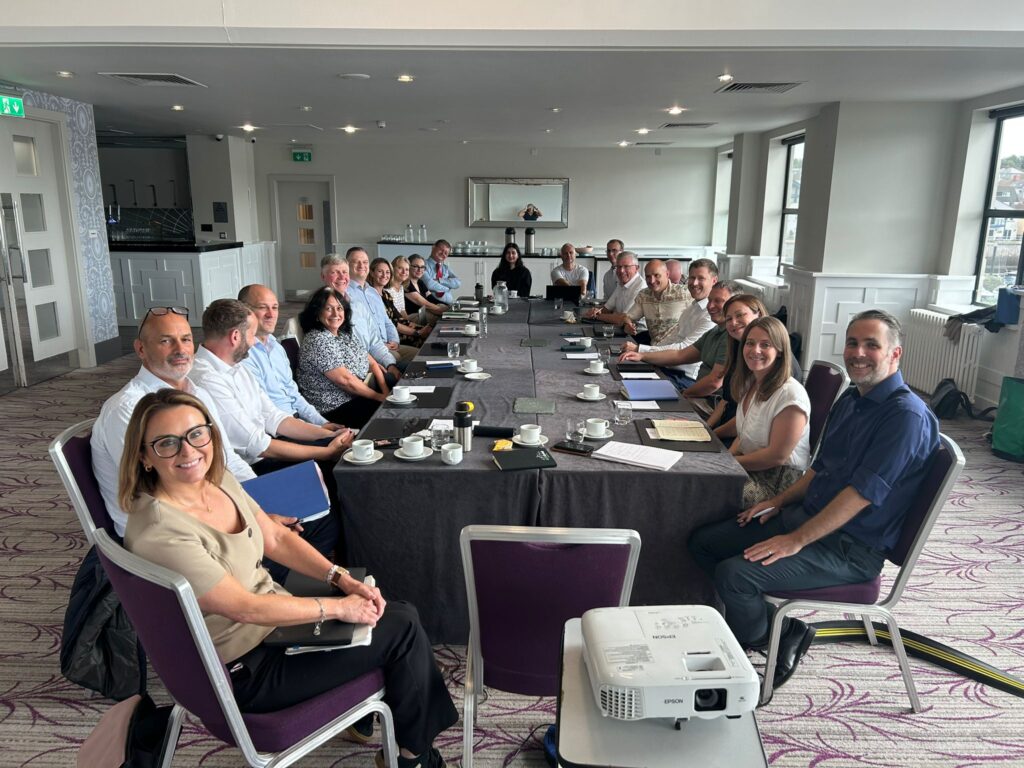
In practice, the Nature Guardian participated in Commission meetings in the same way as other Commissioners, contributing to discussions, asking questions, and offering reflections from the perspective of nature as a stakeholder. The role did not carry a formal vote or veto, nor was it associated with specific decision rights. The influence of the role was therefore indirect and relational.
Alongside formal meetings, the Nature Guardian was also invited to participate in NICW’s project work, primarily through reviewing and commenting on draft reports and work plans. The pilot was also supported by informal conversations with others in the field, external reading, and engagement with wider debates about nature governance. This helped situate the NICW experience within a growing field of practice, including private-sector “Nature on the Board” models and international examples such as the legal personhood of the Whanganui River in Aotearoa New Zealand.
What Changed (So Far)
NICW was explicit that a six-month pilot was unlikely to produce clear, measurable outcomes in terms of policy change or infrastructure decisions, both due to the short period of the pilot and due to the nature of NICW’s remit (advisory rather than decision-making). Instead, the evaluation has focused on early signals of cultural and cognitive shift.
Most Commissioners (5 out of the 6 who responded to the survey) reported that the presence of the Nature Guardian at NICW had had “some” or “significant” influence, both on how they approached their own work at the Commission and on how they perceived other Commissioners to approach their work. The same number (therefore >80%) reported that they had found the experience of working with a Nature Guardian “positive” or “very positive”.
Notably, half of the Commissioners that responded to the survey reported that the pilot had changed their own personal approach to decision-making “a great deal”. Some expressed surprise at the extent to which the Nature Guardian’s presence challenged their assumptions, even where they considered themselves already attentive to environmental issues.
One Commissioner reported through their survey responses that they felt that the pilot had had no noticeable influence on the Commission’s work, or on their own approach to decision-making. They felt that NICW was already sufficiently focused on the role of nature in delivering infrastructure and were not persuaded that the Nature Guardian role had added value to this. They also reported doubts as to whether a human can ever “effectively represent a group they are not part of”.
Several other themes emerged consistently:
Nature became harder to ignore. Nature was no longer an abstract concern, but something explicitly present, resulting in nature related questions and topics being surfaced more frequently, consciously and explicitly. This was experienced in both internal and external discussions. Those matters were sometimes raised by the Nature Guardian directly but often by others, prompted by the presence of the Nature Guardian in the room.
The lens through which discussions took place broadened. Commissioners reported that the lens through which discussions took place become broader, with the presence of the Nature Guardian helping to normalise the idea within NICW spaces that nature needs to be a core part of infrastructure decision-making and opening up the space for nature related topics to be raised and explored more frequently.
A perception that small shifts are likely to add up over time. Whilst it wasn’t possible to point to major outcome changes during the short six-month pilot, Commissioners reported a sense that an accumulation of small nudges observed during the pilot period would be likely to add up to more significant influence on outcomes over time. As one Commissioner described it, “Like a ship – instead of heading North (say Nature-neutral) it has now shifted a few degrees west in a more Nature-friendly direction. So, on day 1, the outcomes would be identical. By day 150, we are already several km away from where our original course would have taken us.”
Discomfort was productive. The pilot surfaced unresolved theoretical questions around why nature should have a guardian when other interests (such as future generations or marginalised groups) do not, and how can one person be expected to represent the full complexity of nature. Rather than being resolved through this pilot, these questions have formed part of the Commission’s reflective practice and are offered as themes to be explored further by the field and through other experiments.
At the same time, some limitations were also clear. Some reflected that the impact of the role might have been felt more strongly in a body tasked with directly making policy or infrastructure decisions (or indeed in a board or body with a more formal decision-making remit more generally). Some questioned whether influence without formal authority risked being perceived externally as performative. Others noted the short period of the pilot and difficulty of measuring success in a direct, tangible way, making it difficult to assess “effectiveness” in conventional terms (for example, under a Treasury Green Book-style appraisal framework) over the limited period of the pilot.
Challenges and Tensions
The pilot raised a number of tensions for wider consideration as this nascent field develops:
Representation. Can any one person meaningfully represent the whole of “nature”? The pilot reinforced the view that representation must be understood as partial, situated, and provisional. This raises questions about plurality, rotation, and accountability that remain unresolved and which are reflected on in the parallel work commissioned from Lawyers for Nature.
Legitimacy. Who authorises a Nature Guardian, and on what basis? In the absence of statutory grounding, legitimacy rested on transparency, consent, and the quality of deliberation rather than formal mandate.
Balance. Some Commissioners worried that giving nature a distinct voice could distort discussions, particularly if other values or stakeholders were perceived as under-represented. This tension echoes wider debates in governance about whose voices are present, and why.
Timing. The pilot took place relatively late in the Commission’s lifecycle, making it harder for the Nature Guardian to influence the content of the work programme. Early involvement is key to ensure that input genuinely contributes to decision making, rather than being seen as being “too late”, an after-thought or as a hinderance.
Evidence and metrics. NICW is committed to evidence-informed decision-making, yet the impacts of governance and system-change experiments are often qualitative, cultural, and long-term. The pilot highlighted the need for longer term experiments and more sophisticated approaches to evaluating systems change, which can be subtle at first.
Recommendations and Next Steps
Building on the pilot and the parallel work by Lawyers for Nature, several next steps suggest themselves.
For NICW, these include considering the future of the role, and exploring ways to embed greater plurality and accountability, whilst continuing reflective evaluation over a longer time horizon.
For other public bodies, the experience suggests starting with small, well-designed experiments rather than waiting for perfect models or legislative change. The following lessons emerge:
- Design matters. A Nature Guardian role needs to be tailored to the specific context with attention to structure, purpose, scope, and support. The nature of the role needs to reflect the activity done by the group in question, and the timing of the appointment needs consideration in light of the group’s work programme or decision-making cadence.
- Make experimentation explicit. Framing the role as a pilot created permission to experiment, learn, adapt, and acknowledge uncertainty. It also lowered the barriers to getting started. Far from being tokenistic, experimentation helps pave the way for deeper structural changes over the longer-term.
- Set out to broaden the lens. No single guardian can purport to speak for all of nature, either from a legitimacy perspective or an expertise perspective. Nature Guardians do not need to make decisions “on behalf of nature” – they can add value by opening up the space and broadening the lens of the discussion, through thoughtful questions, sign-posting to wider sources of information and encouraging mechanisms for drawing on multiple perspectives — scientific, cultural, local, and Indigenous.
- Look for signals of change. Pointing to clear and definite impact on decision-outcomes will always be difficult in governance contexts – instead look for signals of change over time, including cognitive and culture shifts, which can often be subtle at first.
More broadly, the pilot points to the need for continued exploration of how governance systems can better reflect the interests of nature and future generations, particularly in the context of long-term infrastructure planning.
Conclusion
The Nature Guardian pilot did not provide a definitive answer to the challenge of representing nature in governance. What it did provide was a lived experience of what starts to change when nature is treated as present rather than peripheral.
In a time of accelerating ecological crisis, such experiments matter — not because they offer quick fixes, but because they help institutions learn how to ask different questions, sit with uncertainty, and expand their perspective. For NICW, the pilot marked a small but significant step in that direction.

Elspeth Jones was NICW’s Nature Guardian pilot from May 2025 – January 2026.